If you are dumping your kitchen scraps into a bag labeled “compostable,” you likely think you are doing right by the environment. But if you have spent any time in sustainability forums or run a green business, you have probably run into a nagging doubt: do compostable bags leave microplastics in the soil, or are they the real deal?
With greenwashing at an absolute all-time high, your skepticism is completely justified. The straight answer is that a true, certified compostable trash bags option will break down completely into water, carbon dioxide, and nutrient-rich biomass without leaving toxic plastic shards behind. But here is the catch: a lot depends on what the bag is actually made of, the specific stamps on the box, and where that bag travels after you throw it away. Let us break down the actual science and operational realities so your business or home can dodge the marketing traps.
The Big Confusion: Biodegradable vs Compostable Bags
Walk down any grocery aisle or browse a wholesale catalog, and you will see words like “green,” “eco-friendly,” and “biodegradable” plastered everywhere. This loose language causes massive headaches for real waste management sustainability efforts. Traditional plastics break into microscopic pieces over centuries, but they never actually exit the ecosystem.
When weighing biodegradable vs compostable bags, think of “biodegradable” as an incredibly loose umbrella term. Technically, everything degrades given enough centuries. Even a standard oil-based bag will fragment into harmful microplastics over five hundred years, but that is the exact opposite of eco-friendly. “Compostable,” however, is a tightly regulated, legally defined term that requires materials to vanish on a strict biological timeline without leaving a toxic footprint.
The Breakdown Spectrum
- Traditional Plastic Bags: Made from petroleum, these crack apart into permanent microplastic pollution that wreaks havoc on water tables and marine life.
- Oxo-Degradable Bags: These are conventional plastics mixed with chemical additives designed to make them break into fragments faster. They are essentially microplastic accelerators and are widely banned.
- Certified Compostable Bags: Made from renewable plant-based materials, these serve as actual food for microbes, degrading entirely into clean organic matter.
Material Type | Core Base | Time to Disappear | Microplastic Risk | Safety Profile |
Traditional Plastic | Petroleum | 500+ Years | High | Toxic to soils over time |
Oxo-Degradable | Petroleum + Metals | 2 to 5 Years | Severe | Accelerates fragmentation |
Certified Compostable | Plant Starch / Biopolymers | 90 to 180 Days | Zero | Passes strict toxicity tests |
A Quick Tip for Operators: If you run a fast-paced food truck, a local cafe, or a mountain motel, putting the word “biodegradable” on your sorting bins invites trouble. Customers will throw regular plastic in there, ruining your whole batch. Stick to certified compostable garbage bags and use very clear, visual sorting signs.
The Science of How Compostable Trash Bags Breakdown
The actual compostable bag breakdown process relies entirely on living biology rather than just weathering or solar heat. Instead of simply falling apart from sun exposure, true plant-free trash bags act as an actual meal for microscopic organisms, fungi, and bacteria.
Once a genuine compostable waste bag hits a proper composting environment, the ambient moisture and heat cause the structural biopolymers to soften. Local microbes then secrete specific enzymes that chew through the molecular chains of the material. This shifts the solid bag into clean organic material decomposition outputs: water, a little carbon dioxide, and rich humus that feeds future plants.
What Goes Into a Clean Bag?
- Cornstarch Trash Bags: Formulated from raw agricultural starches that soil microbes easily recognize and digest.
- PLA Bioplastic (Polylactic Acid): Created from fermented plant sugars (usually corn), offering great structural strength but requiring higher heat to melt away.
- PBAT Compostable Plastic: A fully biodegradable synthetic polymer that manufacturers mix with natural starches to give the bag elasticity so it doesn’t split when stretched.
Looking for dependable, certified compostable waste solutions for your business? Bulk-Price provides high-quality, plant-based compostable trash bags that meet strict US standards, helping schools, cafes, and hospitality businesses cut down on plastic footprint seamlessly.
Do Compostable Bags Leave Microplastics Behind?
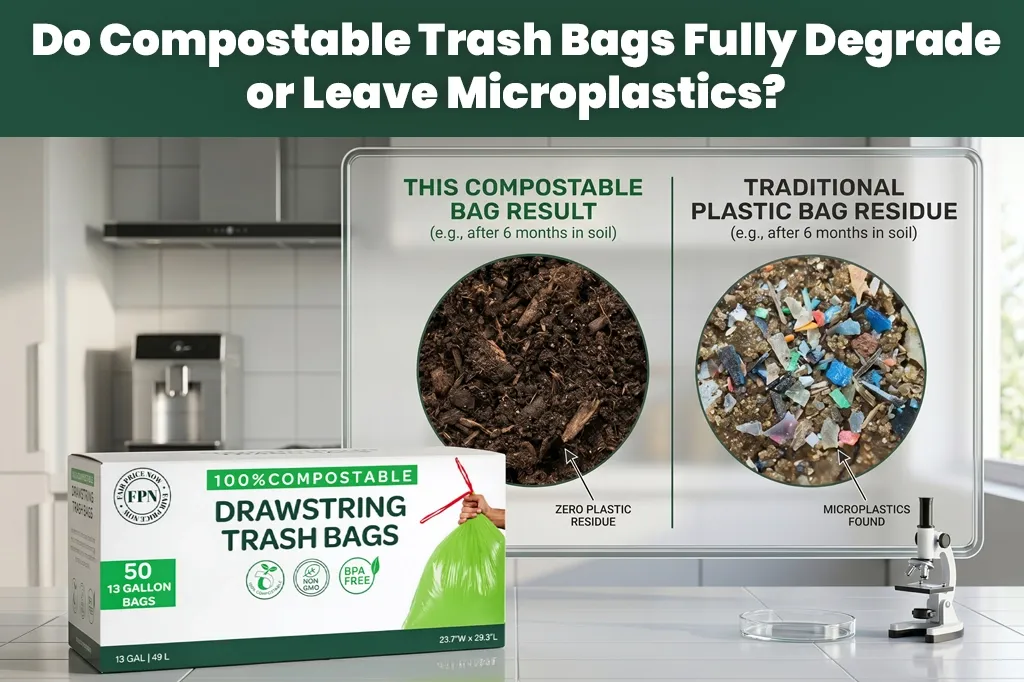
The short answer is no—but only if you skip the cheap knockoffs and buy genuinely certified gear. True compostable bags biodegradation ensures a complete molecular transformation, meaning the bag fully transitions into elements that naturally belong in the dirt.
The real threat of soil contamination happens when uncertified options or intentionally deceptive “green waste bags” sneak into the green bin. If a manufacturer blends cheap petroleum plastic with a little bit of cornstarch to look green, the starch rots away, leaving an invisible, permanent web of microplastics behind. This is exactly why checking for vetted compost certification standards matters so much.
Signs of True Organic Breakdown
- Total Visual Disappearance: The bag doesn’t just tear into tiny squares; it becomes completely indistinguishable from healthy earth.
- No Heavy Metals: The final compost is tested with sensitive plants to ensure their roots grow naturally without stunted cycles.
- Complete Cellular Digestion: Microbes consume the plastic alternatives entirely, preventing micro-fragments from remaining behind.
Industrial vs Home Composting Conditions
Here is where a lot of eco-conscious consumers get tripped up. They buy a box of eco-friendly trash bags, fill them with potato peels, toss them into a backyard pile, and get annoyed when the bag looks brand new six months later.
Industrial composting facilities are highly managed, heavy-duty operations. They keep their huge piles constantly turned, aerated, and steaming at sustained temperatures between 130°F and 160°F. Most head-to-head compostable bags vs plastic bags tests rely on these industrial setups, because that intense heat is exactly what is needed to break the tough molecular bonds of PLA bioplastics.
Backyard Bins vs Commercial Facilities
- Home Compostable Bags: These are engineered from thinner or more sensitive plant bases that can easily dissolve at ambient garden temperatures within a year.
- Industrial Compostable Bags: Built to withstand the rigors of heavy commercial kitchens, these require industrial processing infrastructure to melt down properly.
Ready to upgrade your waste management sustainability? Check out Bulk-Price for commercial-grade compostable options designed for schools, colleges, and food trucks looking to reduce their environmental impact effectively.
The Landfill Reality: What Happens When Logic Fails
A massive point of confusion involves what happens to a compostable waste bag when it gets tossed into standard trash and heads to a regular municipal landfill. Many buyers assume it will simply decompose safely underground.
Landfills are intentionally packed tight, sealed, and deprived of oxygen, light, and moisture to prevent shifting. Without oxygen, natural biological breakdown stops. Instead of turning into rich soil, compostable items buried in a landfill last for decades, decomposing under anaerobic conditions that produce methane gas—a greenhouse gas that hurts our atmosphere far more than carbon dioxide.
Smart Habits to Keep Your Stream Clean
- Never Mix with Blue Bins: Bioplastics ruin traditional plastic recycling batches. Keep them far away from petroleum recycling lines.
- Don’t Waste Them in Trash Bins: If your trash goes straight to a landfill without sorting, using an expensive eco-bag is a waste of money.
- Match Your Municipal Rules: Check if your local city program actually accepts commercial bioplastics before signing up for a service.
Certifications That Prove Are Compostable Bags Truly Compostable
To protect your business from greenwashing accusations, ignore clever marketing copy and turn the box over to check the certifications. Independent testing bodies put these materials through rigorous stress tests to ensure they leave zero microplastics behind.
In North America, the ASTM D6400 certification is the baseline standard for commercial-scale compostability. Across the Atlantic, the EN 13432 certification carries identical weight. These badges guarantee that the material will break down at the exact same speed as natural leaves and paper without ruining the compost quality.
The Only Badges That Count
- BPI (Biodegradable Products Institute): The primary US stamp confirming the bag complies with ASTM industrial standards.
- TUV Austria OK Compost Home: The certification you want if you plan to process bags in lower-temperature backyard setups.
- CMA (Compost Manufacturing Alliance): A badge showing the bag has been field-tested in real commercial composting facilities.
Safe Buying Path ➔ Look for BPI Certified or TUV OK Compost Logos
Stop guessing about greenwashing. Bulk-Price offers fully certified compostable trash bags that meet rigorous environmental regulations, giving your hiking company, school, or food truck verifiable sustainability metrics.
The Honest Pros and Cons of Making the Switch
Let’s look at the operational realities honestly. Moving away from standard petroleum liners is fantastic for your brand’s carbon footprint reduction goals, but it comes with real day-to-day trade-offs.
Here is what you need to weigh before altering your supply chain or kitchen setup:
The Real Benefits
- Drastically Lowers Landfill Use: Allows you to divert tons of organic food scraps into clean agricultural programs.
- Zero Microplastics: Genuine formulations leave behind nothing but healthy organic matter.
- Builds Consumer Trust: Gives schools, cafes, and travel brands verified proof that they run a clean, sustainable operation.
The Practical Challenges
- Higher Upfront Costs: Plant-based biopolymers require advanced manufacturing, making them more expensive than oil-based film.
- Perishable Inventory: If you store them in a hot, humid warehouse for too long, they will begin to break down before they ever hit a garbage can.
- Collection Dependent: You must have access to a municipal green bin or a commercial waste hauler to fully maximize their value.
Real-World Performance: Strength, Leaks, and Shelf-Life
A major fear for high-volume settings like school cafeterias or busy food trucks is bag failure. No one wants an organic waste collection bag splitting down the seam and spilling sour milk and wet coffee grounds all over a polished floor during a rush.
Early iterations of plant-based plastics were admittedly brittle, but modern material science has come a long way. Heavy-duty blends of starches and flexible biopolymers offer excellent puncture resistance and stretch. However, because they respond to humidity, your team has to handle them with a bit more care than old-school plastic.
Handling and Storage Rules
- Rotate Your Stock: Treat these bags like produce. Buy what you need for the year and use older boxes first.
- Keep Storage Dry: Avoid storing your bulk supply next to steam lines, dishwashers, or damp basement floors.
- Mind the Temperature: Let boiling liquids or hot kitchen oils cool down a bit before scraping them into your compost liner.
Need heavy-duty eco-friendly options that do not tear? Bulk-Price engineers durable, leak-resistant compostable trash bags capable of handling commercial kitchen scraps easily.
How to Choose the Right Bag for Your Specific Needs
Picking the perfect match depends completely on your setup, what you throw away, and where your waste goes.
Sourcing Guide
- For Cafes and Food Trucks: Prioritize thick, industrially certified bags built to hold heavy, moisture-laden waste without weeping.
- For Hiking and Outdoor Brands: Look for certified home-compostable options so your guides and guests can handle waste cleanly on the trail.
- For Schools and Offices: Buy bulk ASTM D6400 commercial liners that fit your regional green waste collection collection schedules perfectly.
Frequently Asked Questions
Do compostable bags leave microplastics in the soil?
No. True certified compostable bags undergo a complete biological breakdown. Microbes consume the plant-based polymers completely, turning the material into water, CO2, and clean biomass.
What happens if a compostable bag ends up in a standard landfill?
It preserves rather than decomposes. Because landfills lack oxygen and moisture, the bag breaks down incredibly slowly and can generate harmful methane emissions instead of clean dirt.
How can I spot a fake compostable bag?
Look for verified stamps like BPI or TUV Austria on the box. If a product only says “biodegradable” or “eco-friendly” without official certification numbers, it is likely greenwashing.
Can I throw these bags into my home garden compost bin?
Only if the box specifically says “Home Compostable.” Standard industrial bags need the intense, sustained heat of a commercial facility to break down their bioplastic bonds.
Do cornstarch trash bags tear easily?
Modern plant blends are highly puncture-resistant and stretch beautifully. However, they do have a shelf life of about 12 months and will weaken if stored in hot, damp locations.
Why do compostable bags cost more than traditional plastic?
Plant-based raw materials and specialized agricultural processing lines cost significantly more to run than mass-produced, petroleum-derived plastic operations.
Will wet food waste cause the bag to leak immediately?
No. They are engineered to hold wet food waste securely for several days. However, if you leave soggy scraps sitting in a warm kitchen bin for over a week, the bag will eventually soften.
Can I put compostable bags in my blue plastic recycling bin?
Never. Bioplastics cannot be melted down with traditional plastics like PET or HDPE. Putting them in your blue bin contaminates the batch and sends it all to the trash.
Do they break down quickly if they get washed out to sea?
No. Unless explicitly certified for marine degradation, a compostable bag will behave much like regular plastic in cold ocean water, presenting a hazard to marine life.
Does Bulk-Price carry heavy-duty bags for commercial kitchens?
Yes. Bulk-Price manufactures commercial-grade, fully certified options designed to hold up under the heavy, wet demands of high-volume commercial kitchens.
Ready to make a reliable shift toward a zero-waste operation without sacrificing performance? Explore the durable, fully certified plant-based options at Bulk-Price today to secure premium eco-friendly trash bags at competitive wholesale prices.