
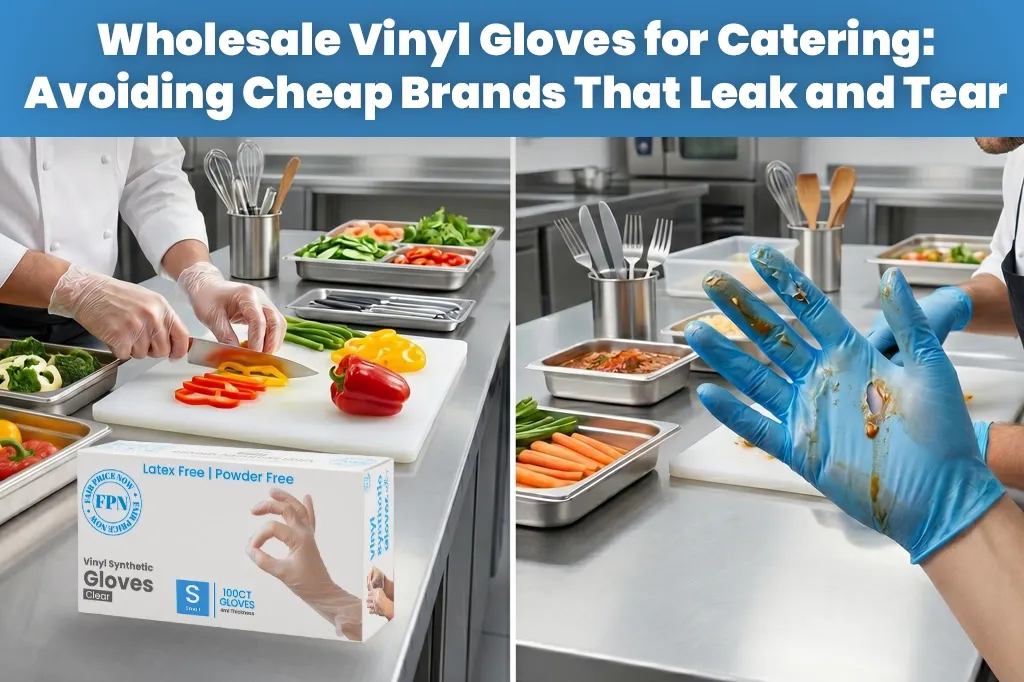
Let’s be real about running a catering business—it’s an absolute pressure cooker. You’re tracking crazy timelines, tight food costs, and general kitchen chaos all at once. The absolute last thing you need during a heavy prep rush is a cheap piece of plastic snapping in half. Yet, tons of caterers keep falling into the budget trap, buying the cheapest wholesale vinyl gloves for catering they can find. Then they watch their prep cooks burn through three or four pairs just to get through one hotel pan of raw chicken.
When you buy flimsy, bargain-basement gloves, they tear constantly, slow your line to a crawl, and open the door to serious cross-contamination. You think you’re saving money, but you’re actually tanking your kitchen efficiency and blowing your budget by throwing away half your inventory. Getting a reliable, food-safe glove that can survive an actual commercial kitchen isn’t a luxury—it’s how you keep your sanity, protect your guests, and save cash.
The Real Cost of Cheap Wholesale Vinyl Gloves
It’s easy for a purchasing manager to look at a pallet of wholesale food service gloves and think, “A glove is a glove, let’s just grab the cheapest box.” But that’s a total illusion. If your cooks have to use double the amount of gloves because they keep ripping, your cheap case just became a massive money pit.
Cheap Glove Box: $30 —> Rips 3x more often —> Real Cost: $90 + Broken Workflow
Bulk-Price Box: $45 —> Zero mid-prep tears —> Real Cost: $45 + Smooth Line
Imagine your crew trying to plates hundreds of appetizers for a wedding. Every time a glove splits, that cook has to stop what they’re doing, walk to the sink, wash up, dry off, fight to get a new glove on damp hands, and restart. It completely kills the rhythm of the line and messes up your timing when seconds count.
The Hidden Drain of Trashy Gloves
- Garbage Cans Overflowing: You’ll find your kitchen bins filling up instantly with shredded plastic, meaning your dishwashers are changing trash bags way too often.
- The “Wrist-Snap” Delay: Crews waste time and get frustrated when glove cuffs snap right at the wrist before they even get them fully on.
- Burning Paid Labor: If a cook spends 5 to 10 minutes a day just wrestling with broken gloves, multiply that across a 10-person kitchen crew over a month. It adds up fast.
What We See on the Ground: At Bulk-Price, we get calls every week from catering owners who are totally fed up. They switched to us because their “cheap” gloves were disappearing twice as fast as high-quality alternatives.
Why Vinyl Gloves Fail in Commercial Kitchens
Vinyl disposable gloves are made by blending polyvinyl chloride (PVC) with plasticizers to make them flexible and easy to wear for quick jobs. But when a factory cuts corners on the raw materials, you get a brittle, stiff glove that gives up the second it faces any real friction.
+————————+——————————————+
| Why They Break | What Happens on the Line|
+————————+——————————————+
| Zero Stretch | They snap at the wrist when pulled tight |
| Paper-Thin Material | Garlic skins or rosemary stems poke holes|
| Trash Seams | The sides burst open during heavy mixing |
+————————+——————————————+
Once your cooks start handling oily foods, warm proteins, or heavy citrus dressings, cheap vinyl starts losing its structure. It bags out, stretches loose at the fingertips, and sags—which is a total nightmare when you’re working with sharp chef knives or hot tongs.
Top Kitchen Glove Killers
- Fats and Cooking Oils: Cheap plasticizers melt down slightly when they hit animal fats, making the glove turn mushy and weak.
- Hand-Mixing Stress: Tossing heavy catering tubs of pasta salad or working seasoning into ground meat forces the seams to their breaking point.
- Kitchen Punctures: Coarse kosher salt, butcher paper corners, and cardboard box flaps will easily shred low-grade vinyl.
Tired of disposable gloves that act like wet paper towels? Check out our heavy-duty, food-safe options at Bulk-Price. We stock real-deal hand protection meant for fast, high-volume kitchen work. Check out the free sample here.
Food Safety Inspections and Glove Quality Standards
Keeping your kitchen up to code isn’t optional. When a health inspector walks through your doors, they watch how your crew manages food safety. If you’re using cheap gloves that develop microscopic pinhole leaks, hand sweat and bacteria escape straight into the food your guests are about to eat.
Micro Pinhole Leak ───► Hand Sweat Escapes ───► Cross-Contamination Risk ───► Health Code Violation
You can’t always see these defects with the naked eye. Shoddy factory quality control leaves tiny splits along the seams of cheap gloves. If an inspector catches your staff prepping food with torn or compromised gloves, you’re looking at instant write-ups and a ruined reputation.
How to Evaluate Glove Thickness and Strength
When you’re comparing bulk vinyl gloves for catering, don’t just look at the price tag. Check the mil rating—that tells you the actual thickness. A lot of bargain-bin economy gloves are only 2.0 to 2.5 mils thick, which is fine for making a quick sandwich but completely useless for real catering prep.
+—————-+——————-+——————————————–+
| Thickness Type | Average Mil | Real-World Use Case |
+—————-+——————-+——————————————–+
| Economy Thin | 2.0 – 2.5 mil | Garnishing plates, box lunches, light duty |
| Standard Prep | 3.0 – 3.5 mil | Slicing veggies, general line work, mixing |
| Heavy Duty | 4.0+ mil | Breaking down meat, heavy-duty cleanup|
+—————-+——————-+——————————————–+
For a busy kitchen crew, a 3.0 to 4.0 mil glove is the sweet spot. It’s thick enough to stop leaks and tears, but thin enough that your cooks can still feel what they’re doing with a knife.
Do Your Own 2-Minute Kitchen Test
Before you drop money on a massive wholesale order, grab a sample pack and try this:
- The Yank Test: Give the cuff a hard tug. It should give a little and stretch smoothly, not just split down the side.
- The Fit Check: Put it on. It shouldn’t feel like a tight rubber band, but it shouldn’t look like a loose plastic grocery bag either.
- The Water Balloon Test: Fill a glove with tap water, tie off the wrist, and give it a firm squeeze. Look closely for tiny drops forming on the seams—if it leaks water, it will leak bacteria.
Stop rolling the dice on mystery wholesale shipments. At Bulk-Price, we run strict quality checks on every batch so you get the exact same durability case after case. Keep your line moving safely with our catering supply gloves. Get a fast wholesale quote today.
Powder-Free vs. Powdered Vinyl Gloves for Food Prep
Back in the day, kitchens loved powdered gloves because the cornstarch inside made them snap right onto sweaty hands. But these days, modern food safety and professional standards have completely shifted to powder-free vinyl gloves.
Old Powdered Type: Cornstarch Powder ───► Floats in air ───► Messy / Cross-Allergen Risk
Modern Powder-Free: Polymer Coating ───► Clean Slip ───► Safe for Food Contact
The big issue with powdered gloves is that the starch absorbs allergens and carries them onto clean surfaces. Plus, it leaves a nasty white dust all over your plates, clear glassware, and your staff’s black catering uniforms—which looks incredibly sloppy at a high-end corporate gig.
The Realities of Powder-Free Vinyl
The Good:
- Zero risk of getting powdery dust into your sauces, batters, or glaze.
- No skin irritation or dryness for workers who are sensitive to cornstarch.
- Keeps your catering staff looking sharp and clean in dark apparel.
The Bad:
- Can be a bit stubborn to put on if your hands are completely wet from the sink.
- Might cost a tiny fraction more per case compared to old-school powdered stock.
To beat the stickiness issue, good manufacturers give powder-free gloves a smooth polymer inner lining. It slips right onto your skin without needing messy starches.
Finding the Right Balance: Price vs. Performance
We get it—every chef and purchasing manager is getting squeezed to lower costs. But hunting down affordable vinyl gloves doesn’t mean you have to settle for trash. You just need to cut out the middlemen and source your supplies at true bulk wholesale rates.
+—————————-+—————————–+
| Cheap Discount Brokers | Bulk-Price Wholesale Vinyl |
+—————————-+—————————–+
| Cheap box price, high waste| Wholesale prices, zero waste|
| Gloves split constantly | Dependable mil thickness |
| Staff uses double the stock | Normal, steady use-rates |
| Frustrated, slow kitchen | Fast, efficient food prep |
+—————————-+—————————–+
Sourcing directly from a supplier like Bulk-Price gets you commercial-grade durability without paying retail markups. Your cost per kitchen shift stays low, and your crew won’t spend their day fighting with brittle hand protection.
Pro-Tip: Skip the Local Depot Runs
Stop sending your managers to local big-box grocery stores or restaurant depots to load up carts with individual boxes of retail gloves. You are paying a massive premium that way. Map out your glove inventory monthly and order by the case or pallet to unlock real savings.
You don’t have to sacrifice safety to hit your budget targets. Bulk-Price gives you true wholesale case pricing on tough, food-safe gloves. See our bulk pricing tiers here.
The Environmental and Financial Waste of Defective Batches
When you buy from random online sellers, consistency is always a gamble. One month the shipment is fine, and the next month you get an entire pallet of brittle, misshapen plastic that breaks if you look at it wrong.
Sketchy Online Vendor]───► 10% Defective Rate ───► Wasted Inventory + Ruined Prep Times
Bulk-Price Guarantee ───► Strict QC Standards ───► 100% Usable Cases
This inconsistency wrecks your inventory planning. If your cooks open a fresh case and half the gloves tear while they’re just trying to pull them out of the box, that entire case is basically garbage.
The True Cost of Bad Quality Control
- Tossed Food Batches: If a glove shreds unnoticed inside a massive tub of expensive potato salad, you have to toss the whole batch for safety. That’s hundreds of dollars in food cost gone.
- Hand Fatigue: Gloves that fit poorly or feel like rough sandpaper slow down your line cooks’ knife work and tank morale.
- Return Nightmares: Good luck trying to get an overseas broker to take back five pallets of defective gloves when you have an event this weekend.
What to Look for in a Wholesale Catering Supply Partner
To avoid these supply chain headaches, work with a domestic partner that gives you clear product specs and real customer service. You aren’t just ordering plastic; you’re buying insurance for your kitchen workflow.
A reliable vendor tracks their stock levels so you don’t hit sudden backorders right before your busiest season. They keep their pricing steady so you can actually forecast your quarterly supply expenses without weird surprises.
Quick Questions to Ask a New Supplier
- Are these gloves explicitly rated for direct contact with oils and high-fat foods?
- What is the exact mil thickness at the palm and fingers, not just the cuff?
- Do you offer set contract pricing if we commit to a monthly shipping schedule?
Ready to stop stressing over your kitchen supplies? Get consistent quality, fast shipping, and tough gloves your cooks will actually appreciate. Talk to our wholesale team at Bulk-Price today.
Step-by-Step Bulk Purchasing Guide for Catering Managers
Getting your glove inventory dialed in doesn’t need to be a massive math project. Use this straightforward approach to keep your kitchen running smooth without overspending.
1. Run a Quick Trash Audit
Count how many boxes of gloves your crew uses over a regular week. If the number looks crazy high compared to the number of plates you sent out, check your kitchen garbage cans. If they’re loaded with ripped, unused gloves, your current brand is failing you.
2. Don’t Just Buy One Size
Don’t buy 50 cases of Large and call it a day. Badly fitted gloves break instantly. If they’re too small, they stretch to the bursting point. If they’re too big, they snag on pan corners and rip. Track your crew’s hands and balance your orders:
- Small: 15% of your order
- Medium: 40% of your order
- Large: 35% of your order
- Extra Large: 10% of your order
3. Set a Automatic Reorder Trigger
Never wait until your last box of Mediums is half empty to jump online and order more. Find your baseline and place your next order the second your warehouse inventory hits a two-week buffer supply. This keeps you safe from shipping delays or sudden, last-minute party bookings.
Frequently Asked Questions
1. Are vinyl gloves safe for all food prep jobs?
Yes, high-quality vinyl is perfect for everyday kitchen tasks like chopping veggies, mixing salads, or plating. But if you have cooks spending hours butchering raw meats or handling heavy, high-fat items, you might want to look at nitrile gloves for that specific station.
2. Why do my vinyl gloves keep tearing right at the wrist?
That’s usually a dead giveaway that the glove is too small for the cook’s hand, or the factory skipped the rolled cuff at the bottom. Cheap brands thin out the plastic near the wrist to save money, causing it to snap the second you pull it on.
3. Is there a real benefit to going powder-free?
Absolutely. Powder-free gloves won’t drop cornstarch into your sauces or leave ugly white dust marks all over your waitstaff’s clean uniforms and expensive plating. Plus, many local health departments completely ban powdered options now.
4. What thickness should I look for when buying catering gloves?
Go for something in the 3.0 to 3.5 mil range for standard kitchen work. Anything below 2.5 mil is way too thin and will shred under normal commercial kitchen use.
5. How can I verify if a wholesale glove brand is good before buying a ton of cases?
Ask for a sample box first. Give it a good pull to check the elasticity, make sure the cuff is rolled, and fill it with water to ensure the seams are solid.
6. Can cheap gloves actually cost me more money?
Definitely. If a cheap box costs $30 but your crew rips through two or three pairs per job, you’re buying double the volume. Buying a tough, reliable box for $45 that doesn’t tear saves you a ton of cash over time.
7. What’s the best size breakdown to buy for a catering team?
A safe bet for a standard kitchen is around 15% Small, 40% Medium, 35% Large, and 10% Extra-Large. Sizing your crew correctly stops a massive percentage of accidental tears.
8. Do vinyl gloves cause latex allergy issues?
No, vinyl is completely latex-free. It’s the safest pick for protecting both your kitchen crew and your catering guests from potential allergic reactions.
9. What does AQL mean and why should I care?
AQL is Acceptable Quality Level. It’s a factory test that measures the defect rate in a batch. A low AQL number means tighter quality control and fewer pinholes, keeping your food prep totally safe.
10. How should I store bulk glove cases in my warehouse?
Keep them in a cool, dark, dry storage area away from direct sunlight or hot equipment lines. High heat and UV rays make vinyl brittle, causing them to crack before you even open the box.
Ready to upgrade your kitchen safety gear without destroying your budget? Contact the team at Bulk-Price today. We specialize in high-durability, food-safe vinyl gloves designed for high-volume commercial catering. Click here to request your free sample pack today.