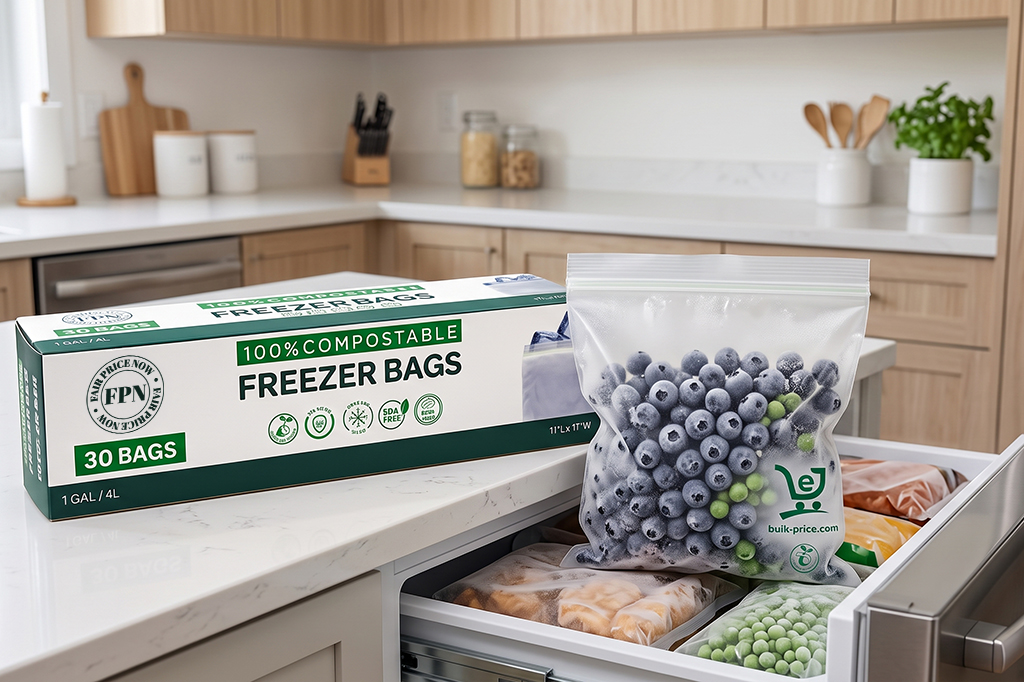
Durability was never really the problem with compostable materials; thin manufacturing was. Bags made without cold storage in mind split under a pound of meat or during a hard freeze, and that failure was blamed on the material rather than the build quality. Bulk-Price’s compostable freezer bags are so thick and sealed that they eliminate the excuse, one that matters to meal-preppers, frozen-food brands, and butchers.
What to Look for in a Compostable Freezer Bag
The word gets used loosely many times. A bag can be labeled eco-friendly without ever being tested for cold storage, and that’s usually where the disappointment starts. A real compostable freezer bag is built from plant-based material instead of petroleum-derived polyethylene, but the material choice is only half the story.
The rest comes down to how it’s built. Bulk-Price’s freezer bags are constructed with:
- A thick, tear-resistant wall rated for meat, sauces, and liquids.
- BPA-free, non-GMO material with nothing hidden in the ingredients.
- A structure specifically built for sub-zero storage, not just refrigerator duty.
That distinction, refrigerator-safe versus freezer-safe, trips up a surprising number of shoppers. There are loads of compostable bags that spend a few days in the fridge and then burst open the instant it gets cold.
Do These Bags Really Survive the Freezer?
Yes, when they’re built for it, and the seal is doing as much work as the material. Freezer burn isn’t really about the cold; it’s about air reaching food. A bag that’s technically compostable but leaks at the zipper defeats its own purpose within a week.
Bulk-Price’s zip-lock closure is designed to stay airtight through repeated freeze-thaw cycles, which is the detail that determines whether a batch of meal-prepped chicken tastes fine in week three or tastes like the inside of a freezer.
Quick tip: You should squeeze all of the air out of the bag, not just along the zipper. Any freezer burn is caused by trapped air pockets and not by an inadequate seal.
Compostable vs. Traditional Plastic Freezer Bags
| Compostable Freezer Bags | Traditional Plastic Bags | |
|---|---|---|
| Material | Plant-based, renewable sources | Petroleum-based polyethylene |
| End of life | Breaks down at commercial composting facilities | Persists in landfills for centuries |
| BPA content | BPA-free | Varies by brand |
| Cold performance | Strong, when purpose-built | Reliable but not sustainable |
| Best suited for | Meal prep, frozen retail, eco-conscious kitchens | General storage, no sustainability priority |
The performance gap that used to separate eco from effective has largely closed. What separates a good compostable bag from a bad one now is manufacturing quality, not just the label.
Compostable Freezer Bags vs. Compostable Sandwich Bags
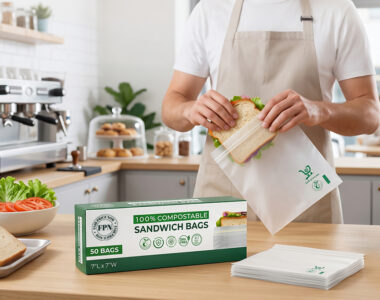
Not every job calls for a freezer bag, and using one where a lighter option would do just as well wastes material and money. Bulk-Price’s compostable sandwich bags share the same BPA-free, zip-lock construction but in a lighter format meant for lunches, snacks, and short-term storage rather than long freezer stints.
- Freezer bags — thicker gauge, built for meat, sauces, and extended cold storage
- Sandwich bags — lighter and more portable, suited to daily lunches, produce, and short freezer use like frozen fruit portions
A kitchen running both meal prep and daily packed lunches typically needs both on hand: freezer bags for the bulk cook and sandwich bags for the grab-and-go portions.
Buying Compostable Freezer Bags in Bulk
A meal-prep service, frozen-food brand, or butcher that delivers products every day is going to have a vastly different order size, which then changes the order of the math when it comes to sourcing bulk compostable freezer bags.
Some points to note before ordering wholesale:
- Consistency matters more at volume. A bag that performs well in a sample pack has to perform identically at unit 3,000. Bulk-Price manufactures to a fixed spec across every batch, so a frozen-food brand isn’t recalibrating expectations with every reorder.
- Sizing flexibility supports different scales. Freezer bags come in 30, 60, and 120-count options; sandwich bags come in 50 and 200-count. That range lets a small kitchen and a commercial operation both order at a volume that actually fits their throughput.
- Buying direct cuts out the middle layers. Ordering straight from Bulk-Price means frozen-food brands and butchers get wholesale value without the extra cost that builds up when a product passes through several hands before reaching the shelf.
Pairing freezer bags with compostable trash bags rounds out a kitchen’s disposal setup, since food scraps and packaging waste usually end up in the same composting stream anyway.
FAQs
Are compostable freezer bags actually freezer safe?
Purpose-built ones are. Bulk-Price’s compostable freezer bags are more likely to withstand freezing temperatures than just any compostable bag. This is worth noting because not all compostable bags have been tested for freezing, and you should check before you use them.
Are compostable freezer bags BPA-free?
Yes. Quality compostable freezer bags, such as Bulk-Price’s, are BPA-free and not produced with the added toxins found in some plastic bags.
Can compostable freezer bags be reused?
They’re designed for single use. Gentle reuse is possible for dry goods if cleaned carefully, but for meat, liquids, or anything perishable, a fresh bag each time is the safer choice.
How do you dispose of compostable freezer bags?
Commercial composting facilities are the intended route. Most compostable freezer bags aren’t designed to fully break down in a standard backyard compost pile without industrial heat.
Should a kitchen stock both freezer bags and sandwich bags?
Most working kitchens end up needing both. Freezer bags are designed to take care of the heavy lifting, bulk meat, and extended cold storage, and sandwich bags take care of daily lunches and lighter, shorter-term needs. Stocking both avoids overusing a thicker (and pricier) bag for a job that doesn’t require it.