
Training your dog to use pee pads can be a lifesaver, especially for busy pet parents or those living in apartments. Imagine having a reliable spot where your furry friend can relieve themselves without the stress of outdoor outings. Here’s a complete guide to get it done right!
Choosing the Right Pee Pads
What to Look for in Pee Pads
Before you start potty training, selecting the best dog pee pads is essential. Look for options that are:
- Highly absorbent to prevent leaks
- Leak-proof for clean floors
- Scented or attractant-infused to draw your dog’s attention
Think of it like choosing a comfy mat for yoga—it needs to feel right for your pup!
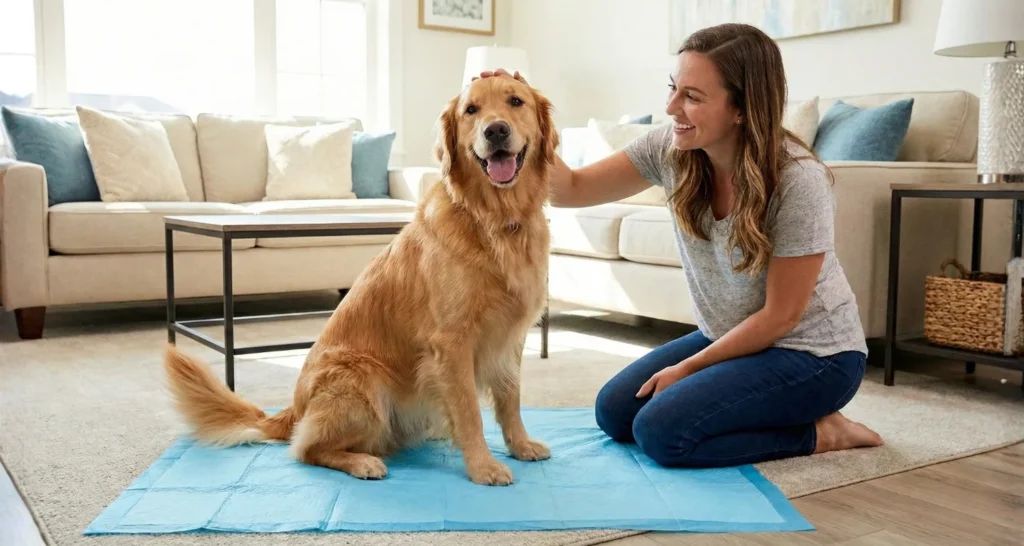
Creating a Designated Restroom Spot
Pick a quiet, distraction-free spot in your home for the pee pads. Laying them in the same place daily helps your dog know where to go—just like humans have their own bathroom.
Building a Positive Association
Let your dog sniff and explore the pee pad. Use treats and praise to create a positive connection. If they sniff, step on, or even partially use the pad—celebrate with excitement! This positive reinforcement encourages repeated success.
Understanding Your Dog’s Potty Schedule
Dogs often need to go after: Meals, Playtime and Naps. If your dog starts sniffing the floor or circling, it’s a clear signal. Gently guide them to the pee pad during these moments.
Rewarding Good Behavior
Whenever your dog uses the pee pad correctly, reward them immediately with treats and praise. Avoid scolding after accidents—just clean up and continue training. Patience and consistency always win!
Setting a Routine
Take your dog to the pee pad every few hours in the early stages. The repetition builds confidence—just like practicing lines before a school play ensures a flawless performance.
From Pee Pads to Outdoor Potty Breaks
If your goal is outdoor potty training, start moving the pee pad closer to the door over time. Eventually, place it just outside until your dog is comfortable eliminating outdoors.
If Your Dog Ignores the Pee Pads
- Ensure the pad is clean and in a quiet area
- Try different scents or brands
- Place a small patch of real grass on the pad for familiarity
Celebrating Small Wins
Pee pad training takes time, so celebrate even small successes. With consistent encouragement, your dog will become a pee pad pro in no time.
Conclusion
With the right dog pee pads, a dedicated training space, and plenty of positive reinforcement, you can teach your dog exactly where to go—indoors or as a stepping stone to outdoor potty breaks. Stay patient, stay positive, and enjoy a cleaner, stress-free home!
Another key part of successfully training your dog to use pee pads is understanding their natural potty schedule and reinforcing the behavior consistently. Pay close attention to your dog’s routines and body language — most dogs need to relieve themselves shortly after waking up, eating, playing, or drinking water. By observing these patterns, you can proactively bring your dog to the pee pad before accidents happen, making training faster and less frustrating for both of you.
When your dog does use the pee pad correctly, always reward them immediately with enthusiastic praise, treats, or a favorite toy. This helps them form a strong positive association with using the pad. Avoid scolding your dog if they have an accident elsewhere; punishment often leads to fear and confusion rather than understanding. Instead, calmly clean the area with an enzyme cleaner so the smell doesn’t attract repeat accidents in the same spot.
Finally, as your dog becomes more confident with the pee pad, you can slowly integrate outdoor potty training if desired — for example, by moving the pad closer to the door over time.
Dog Pee Pad Training FAQs: Expert Answers for Pet Owners
How long does it typically take to train a dog to use pee pads?
Training time varies depending on your dog’s age, prior habits and consistency of your routine. With daily reinforcement, a young or newly adopted dog may pick it up within 1–2 weeks; older dogs may need several weeks of consistent praise and scheduling.
What size or type of pee pad should I start with and where should I place it?
Begin with a highly absorbent, leak-proof pad and place it in a quiet, distraction-free corner of your home that’s easily accessible to your dog. Keeping the pad in the same place every time helps your dog build a clear association with that spot.
What should I do when my dog has an accident off the pad?
Avoid scolding your dog after an accident. Clean up calmly, remove any lingering scent, and continue guiding your dog gently to the pad at regular intervals. Patience and positive reinforcement are more effective.
My dog ignores the pee pad — what can I try to encourage usage?
Check that the pad is clean, fresh and in an easy-to-reach spot. Try pads with scent or attractant, or place a small patch of real or artificial grass on it to appeal to your dog’s instincts. Gradually guiding your dog to the pad after meals or naps can also help.
Can pee-pad training be used as a stepping stone to outdoor potty training?
Yes — you can begin indoors with the pad and then gradually move the pad closer to the door, then outside. Eventually your dog learns to go outdoors. This transition strategy builds on indoor success toward an outdoor habit.
Discover more from Bulk Price
Subscribe to get the latest posts sent to your email.