If you are running a crazy busy animal shelter or managing a professional breeding kennel, let’s be real: you are drowning in pee. Between the constant mopping, that sharp ammonia smell that clings to your clothes, and the horrifying bill at the pet store checkout, waste management feels like a losing battle. You need an industrial-strength puppy potty solution that actually protects your floors. And it cannot break the bank.
When you’re dealing with a litter of eight rowdy puppies or a dozen nervous rescue dogs, those little plastic packs of grocery store disposable puppy pads are a joke. They are paper-thin, they leak straight through to your subfloor, and you burn through them in an hour. Sourcing bulk dog pee pads changes the entire game.
Let’s look at how to choose the best dog pee pads for high-traffic chaos, why wholesale dog pee pads are the only way to save your budget, and how to use them without losing your mind.
1. The Real Cost of Managing Dog Waste in Shelters and Breeding Kennels
Managing a high-volume pet facility means facing a massive mountain of waste every single day. Think about a single litter of German Shepherd pups. Eight little eating-and-drinking machines can drop dozens of potty accidents before lunchtime. In shelters, the problem is anxiety. Scared, shelter-shocked dogs often won’t wait for their outdoor walks, leading to constant accidents on kennel floors.
If you don’t have a hardcore system for indoor potty training and floor protection, you get buried in hidden costs. It is not just about buying bleach. It is the endless labor hours your staff spends scrubbing floors instead of socializing dogs, the ruined baseboards, and the sheer gross factor. Pooled urine breeds bacteria fast. That ruins your indoor air quality and puts vulnerable, unvaccinated puppies at risk.
The Hidden Expenses of Inadequate Waste Management
- Warped Subfloors: Constant moisture rots out wood, stains concrete, and destroys commercial linoleum. Repair bills get ugly fast.
- Wasted Staff Hours: Your team should be matching dogs with families, not spending four hours a day behind a mop bucket.
- Chemical Burnout: Going through industrial disinfectants and laundry detergent at an unsustainable rate just to keep up with wet bedding.
2. Why Retail Puppy Pads Fail in Professional Environments
A lot of startup shelters and hobby breeders make the classic mistake of clearing out the shelves at their local big-box pet store. Don’t do it. Retail dog training pads are fine if you have one tiny Maltese puppy in a condo. Put them in a commercial kennel setting, and they disintegrate.
The reason is simple: retail brands build for low-frequency use. They skip the heavy absorbent polymer core, leaving nothing but cheap tissue paper inside. The liquid just sits there on the surface. A dog steps on it, gets wet paws, and tracks yellow footprints all over your clean facility. Worse, their sharp claws shred the thin plastic backing instantly. Suddenly, you have a lake under the pad.
Retail vs. Commercial Grade Comparison
| Feature | Retail Store Brand Pads | Commercial Wholesale Pads (Bulk-Price) |
|---|---|---|
| Absorbency Layer | Thin tissue paper, major pooling | Heavy-weight absorbent polymer core |
| Drying Time | Slow. Expect wet paws everywhere | Quick dry dog pee pads tech |
| Backing Security | Lightweight plastic, slides around | Heavy-duty, non slip puppy pads backing |
| Odor Containment | Heavy, nauseating floral perfumes | Real pet odor control with activated charcoal |
| Cost Per Unit | Brutal retail markup ($0.40 – $0.60/pad) | Direct wholesale pricing ($0.15 – $0.25/pad) |
3. The Science Behind High-Quality Dog Pee Pads
Pee pads aren’t just plastic-backed paper towels. Or at least, the good ones aren’t. The best puppy pads are engineered with a quilted, multi-layer setup that isolates moisture and locks down odor on contact. If you know what’s happening inside the layers, you won’t get ripped off by slick marketing.
A true ultra absorbent dog pads system uses five distinct layers. The very top sheet uses a tough, tear-resistant non-woven fabric. It lets fluid pass straight through instantly so the surface stays dry to the touch. Underneath that, a quick-dry streaming layer pulls the liquid downward so it can’t pool horizontally.
$$\text{Total Capacity} = \text{Polymer Weight (g)} \times \text{Absorption Factor}$$
The heavy lifting happens in the core, which is packed with Super Absorbent Polymer (SAP). This powder turns fluid into a thick, locked-in gel the second it hits. Even if a heavy dog steps right on it, the moisture can’t squeeze back out onto your floors.
Key Engineering Features to Look For
- Activated Charcoal Grid: This doesn’t just mask the smell; it physically traps ammonia molecules to give you real odor control puppy pads performance.
- Gutter Edges: Sealed, plastic leak barrier borders that stop overflow before it runs off onto your flooring.
- Pheromone Attractants: Built-in scents that speak to a pup’s nose, telling them exactly where it’s safe to go. This makes puppy housebreaking pads way more effective.
4. How to Choose the Right Size for Your Facility
Buying the wrong size pad is just throwing money away. If they’re too small, dogs miss the target, and you’re back to scrubbing floors. If they’re massive and you use them for tiny puppies, you throw away tons of clean, unused material.
Medium Dog Pee Pads (24″ x 24″)
Perfect for small breed dogs, single puppies, or lining individual isolation crates in a shelter environment. They fit cleanly into standard travel carriers and smaller whelping setups without bunching up in the corners.
Large & Extra-Large Pads (24″ x 36″ or bigger)
Don’t mess around with small sizes if you have large litters or giant breed rescues. These big-format leak proof puppy pads give active puppies plenty of room to do their business, wrestle around, and still hit the target area. They are also a lifesaver for senior dogs dealing with incontinence.
5. Wholesale vs. Retail: Breaking Down the Savings
When you are running a non-profit rescue or a tight breeding business, margins are everything. Every dollar you waste on retail markups is a dollar taken away from vet care or high-quality food. Buying bulk dog pee pads directly from a supplier like Bulk-Price cuts out the middleman entirely.
Let’s do some quick back-of-the-napkin math. Say your shelter uses 50 pads a day across all your pens and quarantine rooms. If you buy retail packs of 30 for $15 a pop, you are paying $0.50 per pad. That is $25 a day, or $750 a month. By the end of the year, you have flushed $9,125 down the toilet just on pee pads.
Now, look at wholesale dog pee pads. If you buy in bulk, that price can easily drop to $0.18 a pad. Suddenly, your daily cost drops from $25 to $9. That brings your annual expense down to $3,285. You just saved $5,840 a year with one quick ordering pivot.
6. Step-by-Step Guide to Indoor Potty Training for Litters
Getting a whole litter of puppies to use puppy housebreaking pads consistently takes a distinct strategy. You can’t just drop a pad on the floor, walk away, and hope for a miracle.
Step 1: Map Out the Playpen
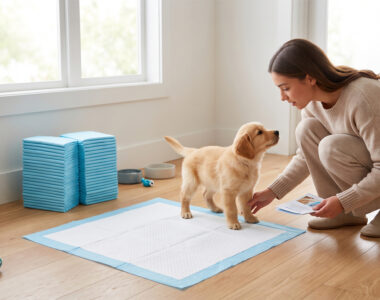
Puppies naturally don’t want to sleep or eat where they poop. Set up your whelping box or pen with their beds on one side, food in the middle, and the potty zone on the far end. Line that zone entirely with non slip puppy pads so they don’t slide under sliding paws.
Step 2: Catch the Clock
Puppies operate on a strict schedule. They almost always have to go within 10 to 15 minutes after eating, drinking, or waking up from a deep nap. Keep a sharp eye out for circling, sniffing, or sudden whining, and gently corral them over to the pad.
Step 3: Throw a Party
The exact second a puppy pees on the pad, give them immediate praise or a tiny, high-value training treat. You want to build a rock-solid mental link between that specific pad texture and getting awesome rewards.
Step 4: The Scent Secret
Change out dirty pads quickly to keep things sanitary, but keep the new pad in the exact same spot. The built-in attractant scents in the fabric, combined with a microscopic trace of their own scent, tells their brains exactly where the indoor potty solution is.
7. Common Pitfalls: Mistakes to Avoid When Buying Bulk Pads
The danger of buying in bulk is that if you pick a bad product, you are stuck with a warehouse full of garbage. Look past the pretty packaging and look at the actual spec sheet before you place a massive order.
The biggest trap is buying purely on the lowest price without checking the polymer content. Cheap bulk pads are often just layers of recycled tissue paper pressed between plastic sheets. They saturate instantly. The urine runs right off the sides, or worse, creates a soggy swamp that gets tracked all over your clean floors.
Red Flags to Watch For
- Zero Mention of SAP: If the listing doesn’t explicitly brag about super absorbent polymer, run away. It’s just paper.
- Whisper-Thin Plastic: If the bottom backing feels like a cheap grocery bag, sharp puppy teeth and nails will shred it to pieces in seconds.
- No Odor Blockers: Avoid plain white paper pads without charcoal or odor-lock tech unless you want your facility to smell like a dirty barn.
8. Pros and Cons of Wholesale Disposable Puppy Pads
Let’s look at the raw truth. No product is perfect for every single scenario. You need to look at the practical pros and cons before deciding if disposables fit your daily workflow.
Pros
- Insane Convenience: Cleanup takes five seconds. Roll up the dirty pad, toss it in the bin, lay down a new one. Done.
- Top-Tier Biosecurity: In a shelter, disease spreads like wildfire. Disposables mean you aren’t washing parvo-exposed rags in a shared laundry machine.
- Dry Paws: Good commercial pads lock fluid away so well that dogs don’t track moisture onto your clean floors.
Cons
- Recurring Budget Line: Even at rock-bottom wholesale prices, it’s an expense you have to pay month after month.
- Landfill Guilt: If you are highly eco-conscious, throwing away bags of plastic-backed pads can hurt your soul a bit.
- The Shredder Factor: Teething, bored puppies love to tear up paper. If left totally unsupervised, you might walk into a snowstorm of shredded fluff.
9. Sustainable Pet Care: Balancing Hygiene and Environmental Waste
It’s a tough spot: you want a sterile, disease-free facility, but you hate generating tons of plastic waste. Sustainable pet care is a huge talking point for modern shelters and ethical breeders right now.
To offset the environmental hit, look for bulk dog pee pads built with eco-friendlier materials—like unbleached plant-based top layers or oxo-biodegradable backing plastics. A lot of high-volume kennels also use a hybrid system. They use heavy-duty disposable pads for newborn litters, whelping, and medical quarantine zones where pathogens are a risk. Then, they switch to washable, reusable cloth pads for older, healthy dogs who are just doing routine housebreaking.
FAQ’s
How long can I leave a commercial pee pad down?
A high-grade pad with a real polymer core can easily handle moisture and kill odors for up to 12 hours. That said, if you have a whole litter of puppies on it, change it as soon as it looks heavily used to keep their environment clean.
Do bulk puppy pads expire if they sit in storage?
Nope. As long as you keep them in a dry, covered space away from direct floods or high humidity, they will stay fully absorbent and ready to use forever.
How do non-slip backings protect my hardwood?
They feature small adhesive corner tabs or a rubberized, high-friction texture on the bottom. This stops the pad from sliding around when dogs sprint across the room, ensuring the plastic stay flat against the floor.
Can I use these for animals other than dogs?
Definitely. Rescues use them constantly to line cages for rabbits, sick cats, guinea pigs, or even birds. They work for any small animal that needs a clean, absorbent floor liner.
What actually turns the liquid into a gel?
That is the Super Absorbent Polymer (SAP). It’s a specialized powder inside the fabric fluff that bonds with moisture at a molecular level, locking it into a solid gel so it can’t leak out.
Will pee pads ruin my dog’s outdoor housebreaking habits?
Not if you use them as a stepping stone. The trick is transition. Once they get the idea, you slowly move the pad closer and closer to your exterior doors until they are signaling to go outside completely.
How do I stop bored puppies from chewing up the pads?
Give them something better to chew on, like frozen KONG toys or safe bully sticks. If they still won’t stop, buy a rigid plastic pad holder frame that locks the edges of the pad down securely.
Why are charcoal pads better than regular white ones?
Regular pads just use fake floral perfumes to cover up smells, which usually just ends up smelling like artificial lavender and pee. Charcoal actually absorbs the ammonia gas molecules, killing the scent completely.
Is it safe to buy pet supplies from wholesale sites?
Yes, if you use an established supplier like Bulk-Price. You get the exact same commercial-grade quality that professional kennels use, without the insane retail markup.
Can I flush these down a commercial toilet?
Absolutely not. The swelling polymers inside the core will expand in your pipes and trigger a massive, expensive visit from the plumber. Always roll them up and put them in the trash.
Don’t blow your budget on flimsy retail pads that leak through to your floors. Head over to Bulk-Price right now to check out our commercial-grade wholesale dog pee pads and keep your kennels dry for less.