Every pet parent knows the struggle. You want to keep your heavy chewer busy, but standard treats vanish in seconds. You look into long-lasting dog cheese bones, only to get hit with major sticker shock. A single yak milk chew can easily run you fifteen bucks. If you have multiple dogs, that habit turns into a massive monthly expense.
You do not have to drain your wallet to keep your dog happy. Cow milk dog cheese bones offer the exact same durable, single-ingredient chewing experience at a fraction of the cost. When you look closely at dairy production economics and basic supply chain efficiency, it is easy to see why cow milk is the smarter, more affordable choice for your dog.
The Real Cost of Keeping a Heavy Chewer Happy
High-quality, long-lasting dog chews are a must for many pet owners. Chewing busts boredom, burns mental energy, and scrapes away nasty plaque. However, standard rawhide alternatives often cause bad digestive blockages, leading many owners to look for natural cheese dog treats instead.
When you buy premium pet products every single week, the total bill hurts. Yak milk dog chews, frequently sold as Himalayan dog chews, carry a heavy price premium. This leaves budget-conscious owners wondering how to find healthy dog chewing treats that actually fit into a normal household budget.
The Multi-Dog Budget Squeeze
If you own two or three dogs, buying twenty-dollar treats gets old fast. A multi-dog home can easily burn through fifty bucks worth of chews in a single weekend.
Retailer and Reseller Margins
Pet store owners face constant questions from customers about why these chews cost so much. Finding a great alternative to yak milk chews allows retailers to offer better value while keeping their own profit margins healthy.
What Exactly are Dog Cheese Bones?
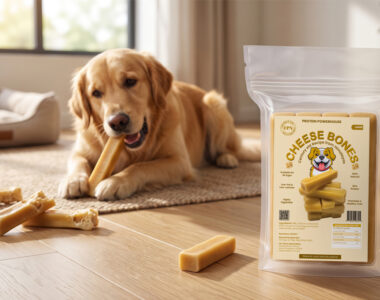
Dog cheese bones are hardened bars of cheese made using traditional Himalayan methods. The process involves boiling milk, separating the curds, pressing out the moisture, and smoke-drying the blocks for several weeks. The result is a rock-hard, low-lactose chew that dogs absolutely go crazy for.
[Boil Milk] ➔ [Separate Curds] ➔ [Press Out Moisture] ➔ [Smoke-Dry Blocks]
These treats are an inherently digestible dog chews option because the curing process removes almost all lactose. This means even dogs with sensitive stomachs can chew them without getting an upset stomach.
The Secret of Low-Lactose Cheese
Many owners worry about feeding dairy to dogs. During production, the liquid whey gets completely strained out. Because whey holds the vast majority of the lactose, the remaining hardened cheese bone is perfectly safe and easy on your pup’s belly.
Basic Ingredients to Look For
A clean, high-quality cheese bone should only contain three or four ingredients: milk, a touch of lime juice, and a pinch of salt to help kickstart the cheese-making process. You should never see artificial preservatives or weird fillers on the label.
Looking for Premium Quality Without the Premium Price?
At Bulk-Price, we supply top-tier, long-lasting cow milk dog cheese bones directly to pet parents and retailers. Get the durability your dog needs at a price that makes sense.
Explore Bulk-Price Cheese Bones Now!
The Economics of Milk Sourcing Costs
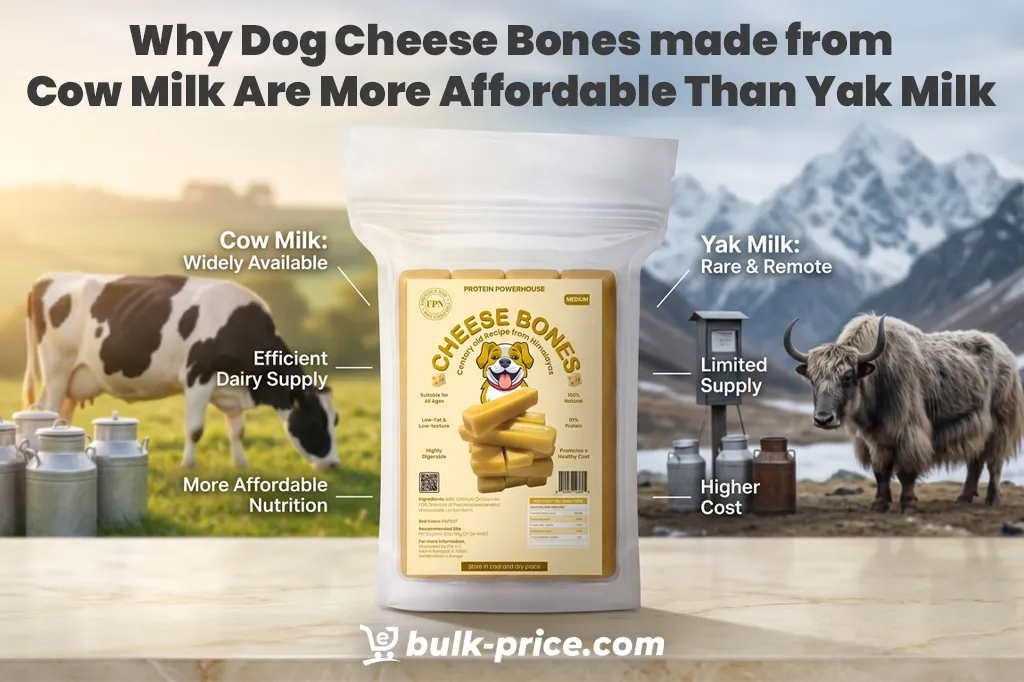
The primary factor driving the final retail price of a pet treat is raw material pricing. Yaks live almost exclusively in high-altitude, rugged regions like the Himalayas. These animals are relatively rare, and their milk yields are incredibly small compared to standard dairy cows.
Cow milk availability, by contrast, is huge across the United States. Because dairy farming economics favor large-scale, efficient production, the initial cost of raw cow milk is significantly lower than yak milk.
Livestock Farming Costs
Yaks graze on wild mountain terrain, making large-scale commercial farming impossible. Cows thrive in structured environments with predictable food sources, keeping farming expenses low.
Milk Yield Disparities
A single dairy cow pumps out multiple gallons of milk every single day. A female yak produces only a tiny fraction of that amount, making every ounce of yak milk far more valuable and expensive to source.
Breaking Down Dairy Production Expenses
Manufacturing costs are directly tied to geography and technology. Yak milk production relies heavily on remote, labor-intensive manual processes. Farmers must collect milk by hand and process it using small-scale, traditional equipment in mountainous terrain.
Traditional Yak Milk Process:
Manual Milking ➔ Outdoor Fire Drying ➔ Long Mountain Transport
Modern Cow Milk Process:
Automated Milking ➔ Industrial Dehumidifiers ➔ Direct Freight Shipping
Cow milk dog chews take full advantage of modern, streamlined pet chew manufacturing. Automated facilities handle pasteurization, pressing, and drying with extreme precision, lowering production costs while keeping safety standards airtight.
Regional Dairy Production Efficiency
Western dairy facilities utilize industrial dehumidifiers and climate-controlled drying rooms. This shortens the curing time safely, slashing the overhead costs associated with storage.
Energy and Utility Costs
Processing cheese in modern facilities requires less energy per unit than running thousands of small, wood-fired drying huts in remote regions. These savings go straight back into your pocket.
Supply Chain Efficiency: Domestic vs. Imported Dog Chews
Shipping heavy items across the globe costs an absolute fortune. Most authentic yak milk chews originate in Nepal or India. They must travel down treacherous mountain roads, pass through complex customs checks, and cross oceans on cargo ships before reaching American store shelves.
Domestic dairy sourcing eliminates these massive international freight fees. By manufacturing cow milk dog chews closer to home, brands drastically lower their shipping costs and completely avoid expensive import tariffs.
Yak Milk Supply Chain:
Nepal Mountains ➔ Sea Freight ➔ US Customs ➔ Distribution Center ➔ Retailer
Cow Milk Supply Chain:
Local Dairy Farm ➔ Processing Facility ➔ Distribution Center ➔ Retailer
Import Tariffs and Fees
Imported pet products face unpredictable regulatory fees and customs inspections. These hidden expenses drive up the final price for the everyday shopper.
Fuel and Logistics Costs
Shipping a pallet of heavy cheese blocks from a local Midwest facility costs a fraction of the price required to fly or ship that same weight across the globe.
Dog Chew Price Comparison: Cow Milk vs. Yak Milk
Let’s look at the numbers to see how much cash you actually save. On average, a medium-sized yak milk chew costs between $12 and $16. A cow milk chew of the exact same weight and dimensions typically ranges from $7 to $10.
Feature | Cow Milk Dog Cheese Bones | Yak Milk Dog Chews |
Average Retail Price (Medium) | $7.00 – $10.00 | $12.00 – $16.00 |
Sourcing Origin | Domestic / Regional | Imported (Himalayan Region) |
Raw Material Availability | Extremely High | Extremely Limited |
Cost Per Ounce | Low to Moderate | Very High |
Monthly Cost (2 Dogs) | Budget-Friendly | Expensive Premium |
Over a single year, switching to cow milk chews saves a household hundreds of dollars without cutting down on your dog’s chew time.
Do Affordable Dog Cheese Bones Compromise on Quality?
A lower price tag often makes shoppers suspicious. Many pet parents ask if budget-friendly dog chews are lower quality or packed with cheap fillers. The answer is a flat no.
The lower cost of cow milk chews is entirely due to supply chain efficiency and raw milk abundance, not bad manufacturing. In fact, domestic cow milk facilities often adhere to much stricter sanitation and quality control guidelines than remote overseas operations.
Clean Ingredient Profiles
Top-tier cow milk chews contain zero artificial additives, starches, or binding agents. They are made exactly like traditional Himalayan chews, simply using a different type of milk.
Rigorous Testing
Domestic manufacturing requires frequent testing for pathogens like Salmonella and E. coli, giving you extra peace of mind before you hand the treat over to your dog.
Chew Durability and Nutritional Value Comparison
Another common worry is that cow milk treats might be softer or wear down faster than yak milk options. However, both treats consist of the exact same structural protein: casein. Once fully pressed and dried, the density of a cow milk chew matches a yak milk chew almost perfectly.
From a nutritional standpoint, both choices provide excellent benefits. They are protein-rich dog chews that naturally pack plenty of calcium, helping to support strong bones and healthy teeth.
Protein Content Comparison:
Cow Milk Chew: ≃ 65-70% Crude Protein
Yak Milk Chew: ≃ 65-70% Crude Protein
Chew Lifespan
Whether your dog is chewing a cow milk or a yak milk bone, an aggressive chewer will take hours or even days to finish it. The chew durability is essentially identical.
Macro-Nutrient Profile
Both styles of cheese bones offer a low-fat, high-protein treat option, making them excellent for dogs that need to watch their weight.
Pros and Cons: Cow Milk vs. Yak Milk Chews
To help you make the best consumer purchasing decisions, let’s look at the objective advantages and disadvantages of each option.
Cow Milk Dog Cheese Bones
- Pros: Highly affordable, consistent domestic quality control, sustainable pet products option, easy to find in stock.
- Cons: Lacks the exotic marketing story of the Himalayan mountains.
Yak Milk Dog Chews
- Pros: Authentic traditional heritage, highly appealing to dogs.
- Cons: Premium pricing, highly vulnerable to shipping delays, expensive to buy for multiple dogs.
Common Mistakes Pet Owners Make with Cheese Bones
To maximize your value for money dog treats, avoid a few common pitfalls that can ruin the chewing experience or waste your hard-earned cash.
- Throwing away the end piece: When the chew gets small, it becomes a choking hazard. Do not throw it out. Pop it in the microwave for 45 seconds, and it puffs up into a safe, crunchy cheese puff.
- Buying the wrong size: Buying a chew that is too small for a big dog leads to quick destruction and increases safety risks. Always size up if your dog has powerful jaws.
- Improper storage: Leaving a wet, chewed bone in a sealed plastic bag causes mold growth. Always let the chew air-dry completely on a counter after your dog finishes a chewing session.
Step-by-Step Guide to Choosing the Best Cheese Bone
Ready to make the switch to affordable dog cheese bones? Follow these simple steps to ensure you get a high-quality product every single time.
Step 1: Examine the Color
A high-quality cheese bone should have a rich, golden-yellow color. If it looks overly dark or unevenly charred, it was likely dried too quickly, which can cause splitting.
Step 2: Read the Ingredient Label
Ensure the label lists only milk, lime juice, and salt. Avoid any products that list potato starch or corn starch as cheap binders.
Step 3: Check for Source Transparency
Look for brands like Bulk-Price that state clearly where their milk comes from and how the treats are manufactured. This guarantees you get a safe, premium product without the inflated price tag.
Frequently Asked Questions
Are cow milk dog cheese bones safe for dogs with lactose intolerance?
Yes. The extensive pressing and curing process removes the liquid whey, which contains the vast majority of the lactose. This leaves a hard cheese treat that is safe for almost all dogs.
How long do cow milk cheese bones usually last?
For most moderate to heavy chewers, a properly sized cheese bone will last anywhere from a few days to a couple of weeks.
Why are yak milk treats so much more expensive?
Yak milk is harvested by hand in remote, high-altitude regions of the Himalayas. The high costs of mountain transport, limited milk supply, and international shipping drive up the retail price.
Can puppies chew on these hard cheese bones?
It is best to wait until your puppy has their permanent adult teeth, usually around six months of age. Always watch your puppy closely when introducing hard treats.
Do these treats stain carpets or have a strong odor?
No. Unlike rawhide, bully sticks, or natural bones, high-quality cheese bones are virtually odorless and do not leave greasy stains or messy residues on your floors.
My dog broke off a large chunk. What should I do?
Take the large chunk away immediately to prevent choking. You can break it into smaller pieces and microwave them until they puff up into a soft, safe treat.
Do cow milk chews contain any preservatives?
Premium options use only natural lime juice and salt as curdling agents and natural preservatives. Always read the packaging to ensure no artificial chemicals were added.
Are these treats good for a dog’s dental health?
Yes. The mechanical scraping action of your dog’s teeth against the hard cheese helps reduce plaque and tartar buildup naturally.
How should I store the chew between chewing sessions?
Let the chew air-dry completely on an open shelf or countertop. Avoid storing damp chews in airtight plastic bags or containers.
Can I buy these chews in bulk to save more money?
Absolutely. Buying in bulk from trusted providers like Bulk-Price is an excellent way for multi-dog homes and retailers to minimize their total expenses.
Want to cut your pet supply expenses without sacrificing quality? Check out our complete line of domestic, long-lasting cow milk dog cheese bones at Bulk-Price today. Give your heavy chewer a treat they love at a price you will love even more