Every cafe owner, school cafeteria manager, and motel operator has stood over a line item budget and asked the exact same question: Why should I pay a premium for eco-friendly sandwich bags when traditional plastic bags cost pennies?
It is a fair question. On the surface, switching to plant-based materials looks like a luxury choice. But when you look closer at the total cost of ownership, the math starts to shift. Buying bulk compostable sandwich bags is no longer just a feel-good environmental choice. For a modern food service operation, it is a strategic financial decision.
The Real Price of Plastic: Hidden Costs You are Missing
Traditional single-use plastic alternatives seem cheap because the environmental and regulatory penalties are backloaded. When you purchase conventional petroleum-based bags, you pay a low upfront price, but your business takes on hidden liabilities.
Consumers actively avoid brands that rely heavily on plastic waste. Cities and states across the country are also tightening packaging compliance regulations. If your local government passes a plastic ban or institutes a landfill penalty, staying stubborn with plastic will cost you overnight.
- Rising Waste Fees: Commercial trash hauling rates are based on volume and weight. Plastic waste builds up, increasing your long-term waste management costs.
- Brand Erosion: Modern customers, especially families at schools or guests at eco-conscious boutique motels, notice your packaging sustainability efforts. Plastic signals outdated practices.
- Regulatory Fines: Compliance laws are moving fast. Getting ahead of single-use bans prevents emergency supplier switches later.
Industry Insight: True sustainable procurement takes the long view. Spending a fraction of a cent more per bag now protects your business from future regulatory fines and customer churn.
Crunching the Numbers: Bulk Purchasing Benefits vs. Single Box Retail
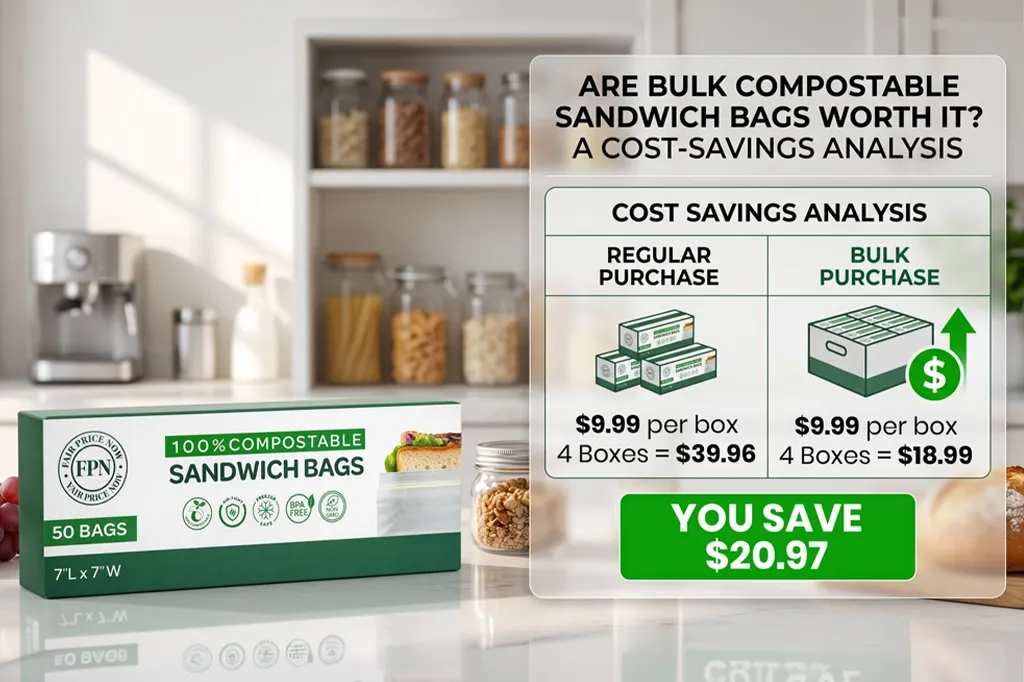
Let’s talk about upfront expenses. If you walk into a standard grocery store and buy a retail box of compostable sandwich bags, your margin disappears. Retail pricing structures are designed for households, not high-volume commercial kitchens.
The secret to making the math work for a cafe or school is wholesale procurement. Buying compostable sandwich bags bulk styles through Bulk-Price drives the unit cost down to a level that competes directly with mid-tier plastic options.
Packaging Type | Average Unit Cost (Retail) | Average Unit Cost (Bulk Wholesale) | Average Annual Cost (100k units) |
Standard Petroleum Plastic | $0.02 | $0.01 | $1,000 |
Retail Compostable Bags | $0.08 | $0.06 | $6,000 |
Bulk-Price Compostable Bags | $0.05 | $0.03 | $3,000 |
By scaling your order size, you mitigate the premium on environmentally friendly sandwich bags. A difference of two cents per bag is easily absorbed when you factor in the marketing value and waste diversion savings.
Ready to find your price break? Check out the wholesale tier pricing at Bulk-Price today and see how affordable switching can be.
The Durability Myth: Performance of Compostable vs. Traditional Plastic
A common objection from kitchen staff is that green food storage alternatives lack strength. People worry that a plant-based bag will dissolve the moment a wet turkey club touches it, or tear apart when jammed into a school lunchbox.
Modern manufacturing has eliminated these flaws. High-quality compostable food storage bags use advanced biopolymers that mimic the elasticity and moisture barriers of polyethylene. They hold up against grease, seals stay locked, and they maintain food freshness just as well as old-school plastic.
- Tensile Strength: High-grade plant materials resist punctures from crusty bread or sandwich picks.
- Moisture Barrier: Keeps moisture inside so bread does not dry out, while preventing exterior condensation from making the bag soggy.
- Temperature Tolerance: Perfect for cold storage and room-temperature displays without becoming brittle.
Certifications Matter: How to Avoid Greenwashing Pitfalls
Not all disposable compostable bags are created equal. The market is flooded with cheap imitations that use deceptive marketing labels like “eco-friendly” or “biodegradable” without any third-party testing to back up the claims.
True sustainability requires verified certifications. If a bag ends up in a commercial composting pile but fails to break down, it contaminates the batch, causing waste management headaches and ruining your green business initiatives.
- BPI Certified Compostable Bags: This is the gold standard in the United States. It ensures the product breaks down safely in commercial facilities without leaving toxic residues.
- ASTM D6400 Standards: This specification proves that the material degrades at a rate consistent with known compostable materials.
- Home Compostable Bags: Look for specific European or TUV certifications if you want bags that break down in a standard backyard compost pile without high heat.
Stop guessing about green packaging. Bulk-Price offers fully certified, transparently sourced solutions for your business. Talk to our team today.
Disposal and Waste Management: Landfill Diversion Tactics
What happens if a customer drops one of your sustainable sandwich bags into a regular trash can? This is a major concern for operators who want to make sure their environmental impact reduction goals are actually being met.
Even if a compostable bag winds up in a landfill, it is still constructed from renewable resources rather than petroleum. However, the real financial and ecological magic happens when you pair these bags with food waste reduction programs.
- Commercial Composting Pipelines: Partnering with local waste management networks allows you to toss the bag and leftover food scraps into the same bin.
- Lower Hauling Fees: Separating organic waste from standard trash can significantly reduce your municipal solid waste bills.
- Closed-Loop Partnerships: Schools and universities can use the finished compost on their own landscaping, saving money on fertilizer.
Operational Efficiency: Staff Training and Smooth Supplier Transitions
Switching your eco-conscious food packaging supplier does not have to cause chaos in your inventory room. The transition is simple if you treat your kitchen staff as partners in the process.
The main hurdle is ensuring your team knows how to store and handle the new materials. Because these bags are designed to break down over time, they should be stored away from direct sunlight and extreme humidity until they are ready for use.
- Designate Storage Areas: Keep your bulk inventory in a cool, dry pantry to maximize shelf life.
- Update Kitchen Signage: Use clear, visual labels on waste bins so staff do not mix plastic wraps with compostable streams.
- Simplify Ordering: Work with a single supplier like Bulk-Price to keep your inventory levels consistent without managing multiple open accounts.
Marketing the Switch: Turning Packaging Sustainability into Customer Loyalty
If you swap your packaging secretively, you miss out on a massive return on investment. Customers want to support environmentally responsible purchasing decisions, but you have to tell them you are doing it.
Cafes can print a quick note on menus, motels can place an informational card in guest rooms, and schools can highlight the change in parent newsletters. This transparency builds deep trust and justifies premium pricing on your food items.
- Menu Real Estate: Add a simple icon next to grab-and-go items: “Served in 100% compostable packaging.”
- Social Proof: Share behind-the-scenes glimpses of your waste management system on social media to show your commitment to sustainable business practices.
- Community Leadership: Position your brand as a pioneer in local plastic waste reduction, drawing in eco-conscious catering contracts.
Want to boost your brand authority? Switch to Bulk-Price products and let your customers know you choose the planet without sacrificing quality.
Common Mistakes to Avoid When Buying Compostable Food Storage Bags
Many businesses rush into buying sustainable products without checking the fine print, leading to wasted budget and frustration.
The biggest pitfall is buying based on price alone without verifying the material lifecycle assessment. Cheap, uncertified bags will tear during a busy lunch rush, resulting in double-bagging that completely destroys any initial cost savings.
- Overstocking Beyond Shelf Life: Do not buy a five-year supply. Stick to a 6-to-12-month supply to ensure the biopolymers stay at peak strength.
- Ignoring Local Infrastructure: Verify whether your local waste management company accepts commercial compostables before promising 100% diversion to your customers.
- Failing to Track Total Cost of Ownership: Look at the big picture, including reduced trash pickups and increased customer retention, rather than just the line-item cost of the bags.
The Final Verdict: Is the Return on Investment Real?
When you run a comprehensive long-term cost analysis, buying bulk compostable sandwich bags is absolutely worth the investment for high-volume operations.
The slight upfront premium is quickly offset by wholesale volume discounts, enhanced brand loyalty, protection from shifting plastic regulations, and reduced commercial waste fees. By choosing certified options through Bulk-Price, you future-proof your business while delivering the quality your customers expect.
Frequently Asked Questions
Do compostable sandwich bags keep food fresh as long as plastic?
Yes. High-quality compostable food storage bags offer excellent moisture and oxygen barriers, matching the freshness performance of standard polyethylene plastic bags for short-to-medium-term food storage.
What is the shelf life of compostable bags kept in bulk storage?
When stored in a cool, dry environment out of direct sunlight, these bags maintain their structural integrity and strength for 10 to 12 months.
Can these bags be used for hot food items?
They are optimized for cold, ambient, and warm items. Very high temperatures directly out of an oven or fryer can weaken the biopolymers, so let hot food cool slightly before packing.
Are these bags safe for microwave use?
No, compostable plant-based materials are not designed for microwave heating. They should only be used for storage and serving.
How can I prove to my customers that our bags are actually eco-friendly?
Look for the BPI logo or ASTM D6400 certification printed directly on the packaging or supplier box. You can proudly display these certifications on your marketing materials.
What happens if a compostable bag goes to a regular landfill?
While they lack the ideal oxygen levels to decompose quickly in a landfill, they still do not leave behind toxic microplastics or chemical residues like petroleum-based options do.
Is there a minimum order requirement for wholesale pricing?
Bulk-Price offers tiered pricing structures tailored for small cafes up to large school districts, making wholesale savings accessible at multiple volume levels.
Do these bags have a strange smell or alter food flavor?
Not at all. Certified compostable bags are completely food-safe, odorless, and inert, meaning they will never alter the taste or aroma of your food.
Can my home compost pile break down these commercial bags?
Most commercial bags require the sustained high heat of an industrial composting facility to break down efficiently. For home use, look specifically for items labeled “Home Compostable.”
How long does it take for these bags to decompose in a commercial facility?
In a properly managed commercial composting facility, these bags will completely break down into nutrient-rich soil within 60 to 90 days.
Ready to cut down on plastic waste without blowing your budget? Explore the full inventory of certified bulk compostable sandwich bags at Bulk-Price. Contact our commercial accounts team today for a custom high-volume quote tailored to your operational needs.