Essential Oil Diffuser vs. Scented Candle: Which One Actually Lets You Breathe Easier?
Nobody buys a candle thinking, ‘I wonder what this is doing to my lungs.’ You pick one up because it smells good, because the packaging caught your eye, or because someone gifted you one. But somewhere between that candle on your coffee table and the search bar where you typed, ‘are scented candles bad for your health’, things can get complicated.
Both candles and diffusers can be perfectly fine, and both can make your air worse if you pick the wrong one. What actually matters is what’s inside them, and the comparison in this article settles it.
What’s Happening to Your Air When a Candle Burns
At its core, a candle is a small and controlled fire, and that is more significant than people realize when considering scented candle health risks. The flame emits not only a delightful scent in your living room, but as the wick burns and the wax melts, it releases even more aroma.
Scientists who have examined the air in the home have discovered that paraffin candles emit volatile organic compounds such as benzene, toluene and formaldehyde, stuff that you don’t want near your morning coffee. Then there’s soot, the fine particulate matter that will creep up the inside of a candle jar, or get on the wall above a candle that’s used a lot. The soot is submicron particulate matter that is too small to be filtered out by your body and will end up in your lung tissue.
The real indoor air quality of one study showed that a single candle, lit, resulted in a marked increase of fine particle levels in the room, which remained elevated long after the flame had been blown.
Wax type and fragrance quality make the story much more complicated, however, and if you’ve ever thought about burning a scented candle without any restrictions, the answer is probably “no” based on the type of candle, not the quality of the scent.
Why Some Candles Burn Cleaner Than Others
The problems are mainly due to the paraffin waxes, which burn quicker, blacken more than their plant-based equivalents, and release more VOCs. Soy wax burns cooler and more evenly than other types of wax and generates only a small amount of soot. Pair that with a lead-free cotton wick and clean fragrance oil, and you’ve already addressed the main contributors to scented candle health risks before the match ever touches the wick.
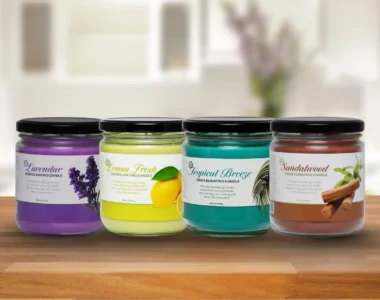
That’s the thinking behind Bulk Price’s scented candles. Every fragrance in the collection, from Lavender to Lemon Fresh, is made with 100% soy wax, a lead-free wick, and phthalate-free fragrance oil. The concerns tied to cheap paraffin candles don’t apply here. But you still get that flicker and warmth that a diffuser cannot provide, without all the chemicals.
One of the easiest changes you can make is to replace the type of candle. If a family member is sensitive to fragrance, this is one of the easiest things to change.
Choosing the Right Fragrance for Your Space
The healthier alternative to scented candles isn’t always a diffuser. It depends on what you’re asking the fragrance to do.
If you want to do something ritualistic before a bath, before you go to sleep, a clean burning, soy candle can do that without the chemical burden that older paraffin candles have. A diffuser will come in handy if a flame would not make any sense (bedrooms, children’s rooms, or any other place where you don’t want to keep an eye on a fire and would still like to smell a perfume. Many homes have both in use, and they aren’t a problem: A candle in the evening, a diffuser during the day, or in a room where a wick wouldn’t be appropriate.
What tends to go wrong is choosing based on packaging or price alone. That’s how someone ends up with a paraffin candle full of synthetic fragrance, enjoying twenty minutes of a good smell and spending the rest of the evening with a headache, genuinely unsure why.
Both can work in a health-conscious home. The variable is what you’re burning, not whether you’re burning at all. Cheap paraffin candles with synthetic fragrance carry real, documented air quality concerns. A well-made soy candle closes most of that gap. A quality diffuser closes it almost entirely, at the cost of the ambiance that only a flame provides.
Use the proper tool in the proper place. Check the contents of the product. If you’re going to burn a candle, burn one made to be used in a cleaner environment. Explore Bulk Price’s full collection of soy wax, phthalate-free scented candles and find the right scent for your space. More guides on building a healthier, better-smelling home are available at bulk-price.
FAQs
Are scented candles bad for your health?
Low quality, low-cost scented candles, particularly paraffin wax and synthetic fragrance, can emit VOCs and fine particulates that can cause headaches and respiratory irritation over extended periods of time. The soy wax, which contains no phthalates in the candle, and a fragrance free of phthalate additives, and a lead-free wick make these concerns much less of an issue.
What is the healthiest way to make your house smell good?
Skip synthetic fragrance and harsh combustion byproducts, and tilt toward essential oil diffusers and soy-based candles with phthalate-free fragrance. You can use both a candle and a diffuser for the best ambiance and air quality: candle for evening time and diffuser for daylight hours or in closed spaces.
Do scented candles release toxic chemicals when burned?
Paraffin candles will emit benzene, toluene, and formaldehyde when they are lit, especially the candles made of high fragrance content or the poor-quality paraffin. The production of soy wax, however, is more limited because it has a lower melting temperature and less of it is produced as by-products. The term “scented candle” is a general term that does not necessarily imply quality ingredients.
How Long Can You Safely Leave a Diffuser Running?
It’s not a good idea to have one running for hours. It is best to end after 30-60 minutes, particularly in small, poorly ventilated spaces. Over the course of time, the smell can cause slight irritation for people who are sensitive (olfactory fatigue), but you can avoid this by rotating the diffuser instead of using it continually.
What is the best fragrance option for people with allergies?
If you have allergies, you need to steer clear of synthetic fragrance altogether. A low percentage oil diffuser is generally the most safe to use, and a soy wax candle with phthalate-free wax and a lead-free wick is also safe to use. Both prevent the chemical overloading that can be an issue for people with allergies.
Explore Bulk Price’s full collection of Scented Candles or get free samples here.