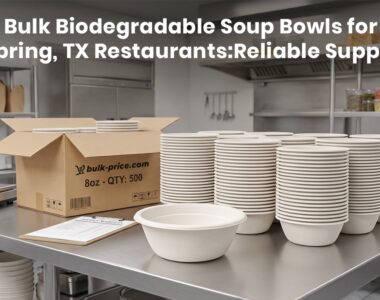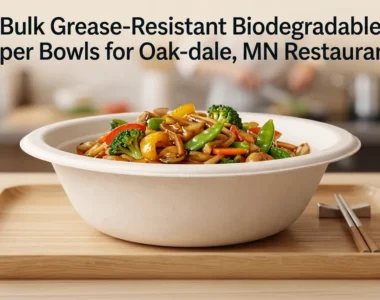
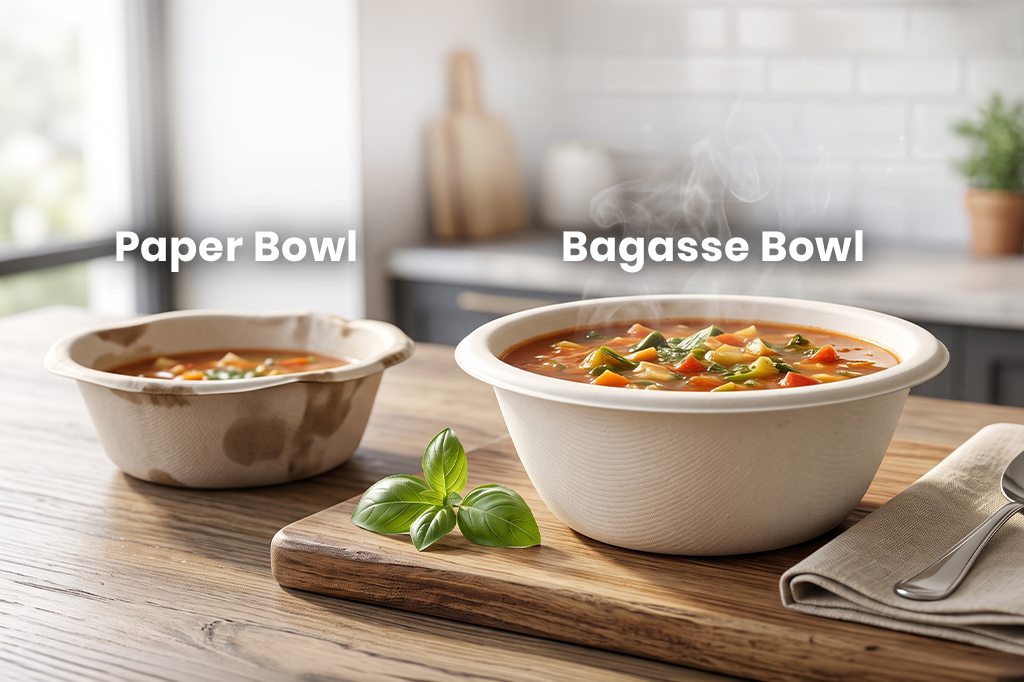
Most bowls look fine when empty. Fill one with hot soup and let it sit for fifteen minutes, and that’s when you find out what you actually bought. Rims go soft, bases sweat through, and a bowl that seemed sturdy on the shelf turns into a mess on a catering table. The biodegradable bowls at Bulk-Price keep getting reordered because they are biodegradable and made of bagasse, which performs under a full service shift and doesn’t fold under liquid heat.
This guide covers what separates a bowl built for soup from one that only survives dry sides, what to actually check before ordering by the case, and why so many caterers and kitchens stop shopping around once they find a size lineup that fits their menu.
What Biodegradable Bowls Are
Sugarcane bagasse is what’s left over once the juice has been pressed out of the cane for sugar- fibrous pulp that used to just get burned or dumped. When pressed into bowls, it’s strong enough that it doesn’t need a plastic liner like most paper bowls do to keep it leak-proof.
That’s the part people underestimate. Bagasse doesn’t warp upon entering the freezer or when exposed to oils and moisture, and it will decompose in 60 to 90 days in a commercial composting facility without leaving behind microplastics. Once a kitchen has run it through an actual lunch rush, it tends to become the default rather than the eco-friendly alternative.
What to Look For Before You Buy
Plenty of bowls get marketed as compostable. Fewer of them hold their shape once there’s broth in them. Here’s what actually matters.
Materials & Build
- Bagasse (sugarcane fiber): microwave-safe, naturally moisture-resistant, handles hot liquid without a liner.
- PLA (corn-based plastic): softens under sustained heat, usually needs industrial composting specifically.
- Bamboo: solid heat performance, but the priciest of the group at volume.
- Foam (EPS): insulates well and costs almost nothing, but it’s banned in a growing list of cities and won’t compost at all.
Sizing & Pack Counts
Size decides whether a bowl actually gets used or sits in the storeroom. Bulk-Price’s biodegradable bowls collection runs three sizes, each solving a specific menu problem rather than padding out a catalog:
| Size | Count Options | Best For |
|---|---|---|
| 2oz | 200 / 1,000 | Sauces, dips, condiments, tastings |
| 6oz | 100 / 500 | Sides, desserts, snack portions, soup starters |
| 8oz / 12oz | 100 / 500 | Full soup servings, grain bowls, mains, ramen-style dishes |
The 2oz gets ignored until a kitchen needs a condiment cup that won’t leak on a delivery tray; then it becomes a weekly reorder. The 6oz is typically the first in a new buyer’s line of return orders because it can be used as a side cup and a dessert cup. Soup falls somewhere between the 8oz and 12oz mark: 8oz is for a standard cup of soup, 12oz is for pho, noodle bowls, chowder, where there’s some extra room to keep things from spilling over.
Why Buyers Order by the Case
Buffet caterers tend to land on the same combination: 12oz for entrées and mains, 8oz for soups and lighter sides. It’s not a complicated system, but it covers most menus without overbuying a size that never leaves the box.
Delivery-heavy kitchens and ghost kitchens lean on the same bowls for a different reason. Since bagasse goes from the freezer to the microwave in one container, there’s no second dish to wash or to explain to a customer reheating leftovers. Schools and event planners buying in volume care about something else entirely: that a 5,000-unit order matches the 500-unit sample exactly, batch after batch.
The Cost Saving on Bulk Orders
Per-unit price drops as the case count goes up, which is the actual argument for buying by the case instead of restocking small bags every other week. A kitchen running through the 6oz size weekly saves more by jumping to the 500-count option than it ever will by placing smaller repeat orders, and it means fewer mid-shift scrambles when supply runs low.
At higher volumes, the price gap between bagasse and foam narrows enough that switching stops being a hard conversation with ownership, especially once a city starts floating single-use restrictions or a major client starts asking questions about packaging.
Order Biodegradable Bowls in Bulk
Free shipping on qualified orders, more than 1.9 million products shipped, and an SSL-secured checkout, Bulk-Price built its fulfillment around large orders landing on time, not just around selling a bowl. Buying direct means one supplier, one invoice, and the same bowl spec across every location. Browse the full biodegradable bowls range or check current case pricing at Bulk-Price.