Introduction
Plastic is everywhere in the modern kitchen. From Zip lock Compostable Bags and plastic wrap to trash liners and food storage, single-use plastic is so embedded in our routines that the idea of going without it can feel overwhelming. But here’s the good news: you can reduce your plastic use dramatically without giving up convenience. In fact, with the rise of compostable alternatives, a plastic-free kitchen is now more accessible, safer, and more affordable than ever.
In this guide, we’ll show you how to transition your kitchen from plastic-reliant to plastic-free using smart swaps like compostable trash bags, food bags, snack bags, and freezer bags from Bulk-Price.com. We’ll cover everything from what to replace, how to make it stick, and why it matters.
Whether you’re a parent packing lunches, a city dweller tight on space, or just someone tired of contributing to landfill waste, this blog is your step-by-step map to a greener, cleaner kitchen.
1. Why Go Plastic-Free in the Kitchen?
- 40% of all plastic waste comes from packaging, and much of that starts in your kitchen.
- Urban consumers are leading the shift, especially in states like CA, NY, and WA where plastic bans are in place.
- A plastic-free kitchen isn’t just about sustainability. It’s about:
- Health: Avoid BPA and harmful chemicals.
- Hygiene: Compostable bags resist odor and mold.
- Impact: Your family can cut 2,000+ plastic items per year.
2. Top Plastic Offenders (And Their Eco Replacements)
| Plastic Product | Eco Alternative From Bulk-Price.com |
|---|---|
| Trash Bags | Compostable Trash Bags |
| Zip Bags | Compostable Food Bags |
| Snack Packs (kids) | Compostable Snack Bags |
| Freezer Storage Bags | Compostable Freezer Bags |
| Grocery Produce Bags | Reusable Cotton or Compostable Bags |
3. Meet the MVPs: Compostable Bags for Every Use
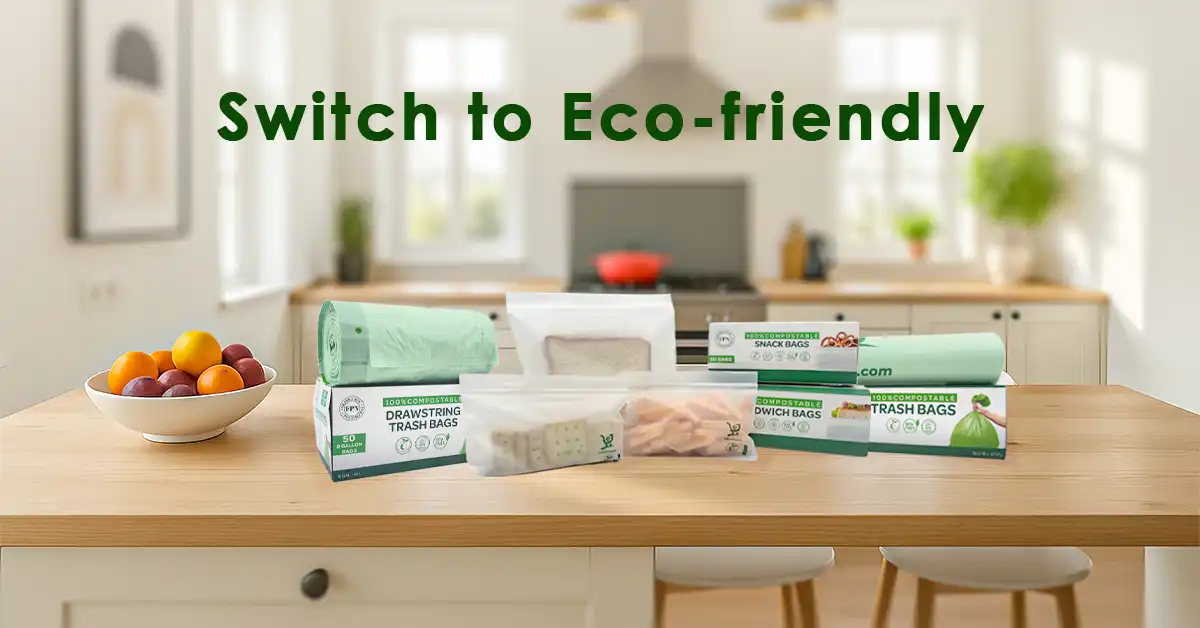
Bulk-Price offers plant-based, leak-proof, BPI-certified compostable bags in different sizes and formats:
- Trash Bags: Tear-resistant, odor-blocking. Available in 3-gallon to 13-gallon options.
- Food Bags: Great for sandwiches, chopped produce, and leftovers. Clear, breathable, freezer-safe.
- Snack Bags: Perfect for school lunches and on-the-go snacking. Easy open and resealable.
- Freezer Bags: Built for batch cooking and long-term freezer use. Protects against freezer burn.
🛒 Shop all compostable bags here
4. Are Compostable Bags Actually Durable?
Yes — but only the good ones. Cheap ones rip. Ours don’t.
- Tested for real-life use:
- Freezer bags hold soup.
- Snack bags survive toddler backpacks.
- Trash bags handle moisture and weight.
- Certified Compostable: Meets ASTM D6400, BPI certified.
- Shelf Life: Strong for months; breaks down in compost, not your kitchen.
- Customer Example: A family of four in Seattle replaced 300+ plastic bags with Bulk-Price bags in 2 months. Zero leaks.
5. How to Store Food, Freeze Meals, and Pack Snacks the Eco Way
Food Storage
- Use compostable food bags for daily use.
- Store cut veggies, prepped meat, or lunch portions.
Freezing
- Let food cool before storing.
- Don’t overfill. Compostable bags expand slightly when frozen.
- Label and date with compostable stickers.
- Pro Tip: Double-bag soups and stews if freezing longer than 2 months.
Snack Packing
- Great for kids, picnics, or portion control.
- No microplastics, no toxins, and 100% backyard compostable.
- Send your kids to school with zero-waste snacks.
6. Will This Work for Families with Kids?
Absolutely. In fact, families often get the biggest ROI from switching:
- Safer materials: No BPA, phthalates, or petrochemical residues.
- No leaks: Great for juice boxes, grapes, baby snacks.
- Time-savers: Pre-pack and freeze snacks for the week.
- Real Parent Review: “I used to spend $20/month on Zip locks. Now I buy a monthly Bulk-Price box and we’re set — and greener.”
7. How to Start (Without Overwhelm)
- Swap what you use most first (trash bags or snack bags).
- Keep a backup stash if it helps your confidence.
- Set a “plastic-free challenge week” for the household.
- Educate kids — make it fun, not forced.
- Create a compost bin corner in the kitchen.
- Track your plastic savings and celebrate milestones!
8. State Laws You Should Know About
- California: Bans single-use plastic bags, mandates certified compostable.
- New York: Statewide plastic bag ban since 2020.
- Oregon: Requires color-coded compostable bags.
- Colorado, Maryland, Washington: Mandates compostable food packaging in many cities.
- If you live in Seattle, San Francisco, Portland, or Boulder, compostable bags aren’t a choice — they’re required.
9. Final Tips for Success
- Store compostable bags in a dry, cool place.
- Read disposal instructions: Do NOT recycle them.
- Use compostable labels to avoid contamination.
- Keep extras in your car or tote for impromptu use.
- Join local sustainability groups for ideas and support.
- Post your progress on social media to inspire others.
Conclusion
You don’t need to give up convenience to go plastic-free in your kitchen. With compostable trash, food, snack, and freezer bags from Bulk-Price.com, the transition is easier than ever.
Cleaner homes. Safer food. Happier planet.
Frequently Asked Questions
1. What are compostable bags and how are they different from plastic bags?
Compostable bags are made from plant-based materials like cornstarch and biodegradable polymers. Unlike traditional plastic bags that can take hundreds of years to break down, compostable bags decompose naturally under composting conditions without leaving harmful residues.
2. Are compostable bags strong enough for everyday kitchen use?
Yes, modern compostable bags are designed to be durable, leak-resistant, and tear-resistant. They can handle both wet and dry kitchen waste while maintaining performance similar to conventional plastic bags.
3. Can compostable bags be used for food storage?
Absolutely. Compostable bags come in various types such as freezer bags, sandwich bags, and snack bags. Many are BPA-free, non-toxic, and safe for storing food while helping reduce plastic usage.
4. Do compostable bags break down in home compost systems?
Some compostable bags are suitable for home composting, while others require industrial composting facilities. Always check certifications or labeling to ensure proper disposal and effective decomposition.
5. Why should I switch to compostable bags in my kitchen?
Switching to compostable bags helps reduce plastic waste, supports sustainable living, and minimizes environmental impact. It’s an easy step toward a greener lifestyle without compromising convenience.