How to Choose Heavy-Duty Compostable Trash Bags for Wet Kitchen Waste
A compostable trash bag is meant to contain your trash without making a mess. This sounds simple enough, but anyone who’s had one split while taking out the trash knows that’s not always guaranteed. This guide will assist you in differentiating between bags that work and those that just sell themselves.
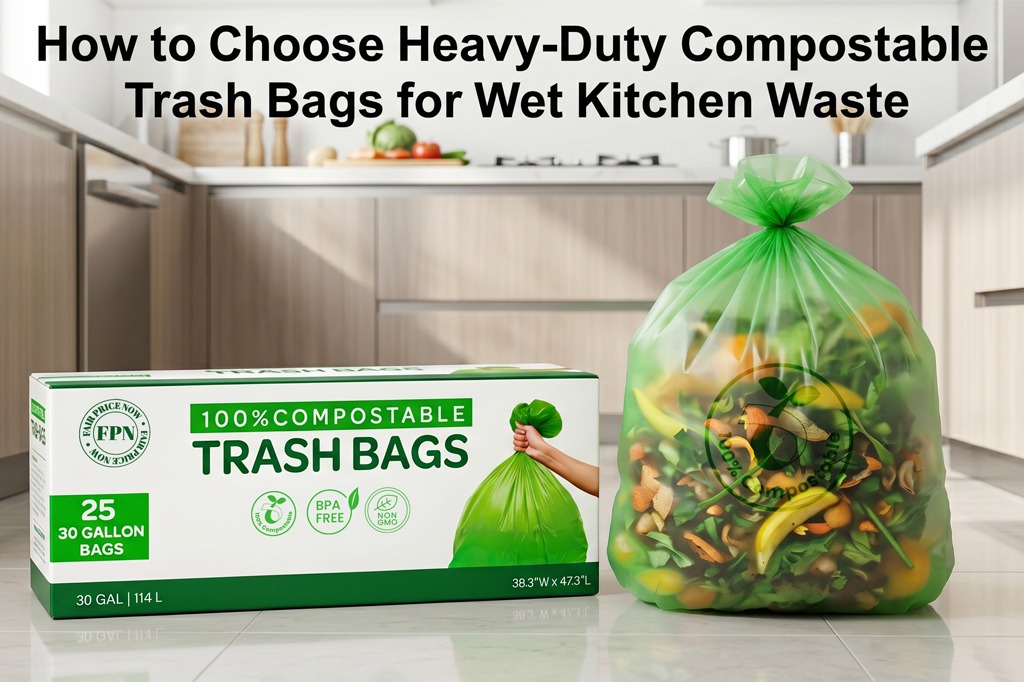
You may be looking for the perfect compostable kitchen trash bag for your home, your commercial kitchen, or you may be purchasing bags in bulk to save money on per-unit costs, but the main goal is that you want a bag that will hold wet waste, will last long enough to be useful, and will actually break down in the manner in which it is supposed to. Browse all of BulkPrice’s heavy-duty compostable trash bags, and compare durable heavy-duty options that are available by the case.
Why Heavy-Duty Matters: What Separates a Good Bag From a Bad One
Standard compostable trash bags are typically 0.7–0.8 mil thick. That’s fine for a dry bathroom bin. It’s not fine for three days of food prep scraps, fruit peels, and soaked paper towels sitting in a 13-gallon kitchen can.
Wet food waste creates two problems simultaneously. Over time, the liquid starts to ruin the bag’s base material and the repeated weight of objects adds pressure to the seams every time. A bag that performs at day one may be structurally compromised by day three, especially in warm kitchens where organic material is active.
To solve this problem, heavy-duty compostable garbage bags are 1.0-1.13 mil (25-30 microns) thick and have reinforced seals at the bottom. The best options are those with a star-seal base (film is folded and bonded in several directions, not just horizontally) and a closure that uses a drawstring or handle-tie, a way to distribute the weight of the contents across the bag.
The difference is real. At 30 microns, some durable bags are nearly twice the strength of entry-level compostable options and hold up for the kind of 3–5 day usage cycles most households prefer.
Buying Criteria Worth Paying Attention To
Here’s what experienced buyers and facilities managers look at:
Factor | What to Look For | Why It Matters |
Thickness | Minimum 1.0 mil / 25 microns for wet waste | Thinner bags fail faster with moisture-heavy food scraps |
Bottom Seal | Star-seal or reinforced bottom seam | Flat-bottom seals leak more easily under wet loads |
Closure Type | Drawstring preferred; handle-tie acceptable | Drawstrings distribute weight better when lifting full bags |
Shelf Life | 1 year from manufacture; store cool and dry | Compostable film degrades over time even in storage |
Count Per Pack | 30–100 count for household; bulk rolls for commercial use | Bulk purchasing significantly reduces per-bag cost |
Leak Resistance and Odor Control: Managing Wet Food Waste Realistically
There is no compostable bag that will 100% keep moisture out for long periods. It is not a defect, it’s just what they do. But you can manage this:
- Empty bags with heavy wet food waste every 2–3 days rather than waiting for a full bag.
- Drain excess liquid from food scraps before disposal; pasta water, meat drippings, and excess juice from fruit can significantly shorten a bag’s functional life.
- Line the bottom of your bin with a newspaper sheet or paper bag if you’re running into consistent moisture issues at the base seam.
- Store open bags in a cool area of the kitchen; heat accelerates breakdown in compostable film.
On odor, compostable bags are made from plant-based materials, including cornstarch and PLA (polylactic acid), and unlike polyethylene plastic bags, they do not form a chemical smell barrier, and they don’t retain odors as plastic does.
Why Bulk Buying Makes Sense for Regular Use
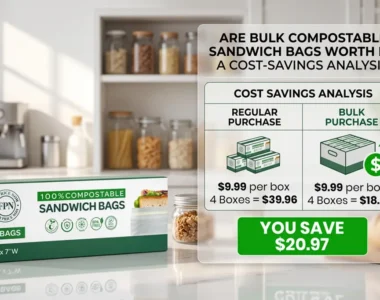
Retail compostable bags can cost a lot when it comes to the cost per bag, especially for households that use them in a box of 30 bags every few weeks, or businesses that use them on a daily basis for food waste. Buying in bulk is where the economics shift significantly.
Commercial compostable garbage bags bought at case volume typically run 30–50% less per unit than retail single-box pricing.
That’s a substantial savings for a restaurant or food service operation that’s operating through 20+ bags a day. Heavy Duty Compostable Trash Bags at Bulk Price are available in case of quantities to make it convenient to maintain a steady supply, without paying the retail price each time.
A Simple Way to Get Started
When purchasing compostable kitchen trash bags for a single home, a retail pack of 30 will suffice for testing out efficacy before deciding. If you’re outfitting a commercial kitchen, office, or property management operation, bulk pricing makes the most practical sense. If you’re looking for the most durable compostable trash bags, check out BulkPrice’s collection of compostable trash bags.
FAQs
Can 13-gallon compostable trash bags hold up to wet kitchen waste?
Yes, but if you pick the right thickness. The larger bags (1.0 mil or thicker) with reinforced bottom seals are good for wet food waste and last 2-4 days. If you are using thinner bags (less than 0.85 mil), these are better for dry or light waste. If most of the use is for wet materials, always choose a star-sealed base instead of a flat-bottom seam.
How many days does it take for compostable garbage bags to break down in the garbage?
Under normal kitchen conditions, most heavy-duty bags will last for 3–5 days. For wet food waste, 2-3 days is a safer time. The food scraps that are high in moisture, acidic, or alkaline (citrus, meat, dairy) break down more quickly when exposed to heat. Don’t fill bags to the brim and drain off excess liquid to prolong working life.
What makes heavy-duty compostable bags different from standard ones?
Mainly, the thickness and construction of the seal. Heavy-duty compostable garbage bags are 1.0 – 1.13 mil thick and are around 25 – 30% thicker than the standard garbage bags, which are 0.7 – 0.85 mil thick. They also often have star-seal fittings at the bottom, rather than flat-bottom seams, so as to spread the pressure out and avoid leaking under wet load. When lifting a full bag, drawstring closures will provide extra structural support.
Are compostable trash bags more expensive than regular plastic bags?
Yes, per bag, typically 2-4 times the retail price of commodity plastic trash bags. When purchasing in bulk, however, this difference is greatly reduced. When the volume of food waste bags used at a business or home is constant, the cost per unit of compostable food waste bags can be significantly closer to that of standard bags, while the sustainability advantage remains intact.
What is the best way to store compostable trash bags for shelf life?
Keep unused bags in a cool, dry place, away from heat, humidity, and direct sunlight. Compostable film is environmentally sensitive; extended exposure to heat or moisture prior to use will increase degradation during storage. The typical manufacturers’ guarantee for shelf life is 12 months from the manufacture date. It’s practical to purchase 2-3 months’ supply at a time because of the cost savings and freshness of the product.
Ready to place your bulk order? Or Still thinking to cut cost! You can still save money by ordering samples at bulk-price.